
This is why taking breaks makes you more productive. Think of your brain like a device running too many apps at the same time — eventually it slows down, overheats, and performs worse. Research in cognitive psychology shows that mental focus naturally declines after long periods of uninterrupted work. Short, intentional pauses help reset your attention system, allowing the brain to clear fatigue and return sharper. Studies consistently show that people who step away briefly maintain accuracy and focus far longer than those who push nonstop.
But there’s more to it than just preventing tiredness. Breaks actually strengthen the kind of thinking that leads to better ideas. Stanford researchers found that simple movement, like walking, boosts creativity and problem-solving because it activates different neural pathways than sitting at a desk. That’s why a quick stroll or stretch can suddenly make a solution obvious — your brain processes information more flexibly when given space to breathe.
There’s also strong evidence from attention restoration research showing that certain types of rest — especially moments spent in calm environments or light, relaxing activities — help rebuild your ability to concentrate. Techniques like the Pomodoro method use this science to pair focused work with planned recovery, creating a rhythm that keeps your performance high instead of letting your energy collapse by midday.
In this article, we are going to explore how these breaks truly enhance your productivity and how you can use them effectively.
Table of Contents
What Does It Mean to Be Truly Productive?
The Difference Between Busy and Productive
Most people confuse being busy with being productive. Busy means your day is packed — lots of tasks, lots of movement, lots of stress. But productivity is something completely different. It’s about the impact of what you do, not the number of hours you rack up. Productivity is the ability to get meaningful work done efficiently, with clarity and purpose.
Think about someone jumping between emails, WhatsApp notifications, spreadsheets, and social media while believing they’re “working hard.” The brain doesn’t function well like that. Neuroscience has shown that constant task-switching drains energy and reduces overall performance. When your attention keeps shifting, your brain spends extra time reorienting itself, which psychologists call “attention residue.” That residue — leftover focus from the previous task — slows your thinking and reduces the quality of what you’re doing now.
Being productive is more intentional. It’s choosing fewer tasks, doing them with more focus, and protecting your mental energy. It’s not about how many hours you spend working, but how much value you create within those hours. Ironically, truly productive people often work less but achieve more because they give their brain room to think clearly.
Why Constant Work Doesn’t Equal Better Results
There’s a popular belief that more hours equal more output. But the human brain has limits, and pushing past them doesn’t increase quality — it decreases it. Studies from the University of Illinois and other cognitive research centers show that prolonged focus leads to cognitive fatigue, which causes mistakes, slower thinking, and poor decision-making.
Think of your focus like a battery. At the beginning of the day, it’s full. But every task, every decision, and every interruption drains it. When you work for many hours without a break, you’re basically forcing yourself to function on low battery. Productivity dips, creativity drops, and stress hormones shoot up.
This is why people who overwork often notice they spend hours on something that could have taken 20 minutes if they were fresh. True productivity isn’t about squeezing more tasks into your day — it’s about maintaining the mental clarity to do your best work.
Why Taking Breaks Makes You More Productive
How Breaks Improve Mental Focus
Breaks act like the refresh button your brain desperately needs. When you step away from a task — even for just a few minutes — your attention resets. This reset prevents your brain from entering a state of “cognitive overload,” where your ability to process information starts to deteriorate.
One study showed that people performing sustained-attention tasks performed significantly better when allowed short mental breaks. It’s not that the task became easier — it’s that the brain had a chance to release tension and return sharper. The moment you return, you’re more alert, more accurate, and far more capable of focusing on details you might have missed before.
The Brain’s Need for Rest Cycles
The human brain works in rhythms called ultradian cycles — natural waves of high and low energy that repeat throughout the day. On average, your brain can maintain deep focus for about 60 to 90 minutes before it needs a recovery period. This isn’t laziness; it’s biology.
During a break, your brain moves tasks into long-term memory, processes emotions, and resets neurotransmitter levels like dopamine and norepinephrine. These chemicals fuel motivation and alertness. Without breaks, their levels fall, and you feel tired, unfocused, or unmotivated.
Breaks synchronize your work with your brain’s natural capacity, allowing you to produce higher-quality work over longer periods.
How Short Pauses Prevent Mental Fatigue
Short pauses act as buffers between your brain and burnout. When you work continuously, stress hormones increase, and neural circuits get overloaded. A 2–5 minute break — stretching, breathing, stepping outside, sipping water — is enough to interrupt that cycle.
These micro-breaks are especially powerful because they’re easy to fit into your day, even when you’re busy. They lower mental strain and keep your attention stable, helping you avoid the slow but steady slide into exhaustion. You don’t lose productivity by pausing — you protect it.
The Science Behind Breaks and Higher Productivity
Cognitive Benefits of Rest
When you rest, your brain switches into what scientists call the default mode network — a state where your mind wanders in a free, relaxed way. You’re not actively working, but your brain is still processing information. This mode is essential for memory consolidation, emotional balance, and problem-solving.
Rest helps your brain sort through information, make connections, and generate insights. That’s why you often find answers to problems when you’re not actively thinking about them — your brain works quietly in the background, stitching ideas together.
Breaks also restore executive function — your ability to plan, prioritize, and manage tasks effectively. Without rest, your executive function weakens, and you start making poor choices (like procrastinating, getting distracted, or doing the easy tasks instead of the important ones).
How Breaks Boost Creativity
Creativity isn’t something you can force; it needs mental space. Research by Stanford University famously showed that walking increases creative output by about 60%. Movement activates different areas of the brain, increases blood flow, and encourages divergent thinking — the ability to generate multiple ideas.
But even quiet breaks improve creativity. Daydreaming, looking out a window, or listening to soft music gives your brain room to explore new patterns of thought. This is why your best ideas tend to come when you’re showering, relaxing, or doing something unrelated to your work.
Creative breakthroughs are more likely when your brain is rested, not when it’s stressed or overloaded.
Why Overworking Leads to Burnout and Declining Output
Burnout doesn’t happen overnight — it’s a gradual erosion of your energy, motivation, and mental resilience. Overworking increases cortisol, the body’s primary stress hormone. While helpful in small bursts, consistently high cortisol levels damage your mood, sleep, memory, and concentration.
As burnout sets in, your productivity drops dramatically. Tasks take longer, mistakes increase, and your ability to think clearly becomes compromised. Even worse, burnout can lead to physical symptoms like headaches, muscle tension, low energy, and trouble sleeping.
Taking breaks interrupts the burnout cycle. It gives your mind permission to reset, your body time to relax, and your emotions space to stabilize. People who take regular breaks stay energized longer, think more clearly, and maintain consistent performance throughout the day — not brief moments of productivity followed by long declines.
Types of Breaks That Improve Productivity
Micro-Breaks (30 Seconds–2 Minutes)
Micro-breaks are tiny, almost imperceptible pauses that last anywhere from 30 seconds to 2 minutes. These short moments are surprisingly powerful. Even just standing up, stretching your arms, or taking a few deep breaths can reset your focus and reduce the physical strain of sitting too long.
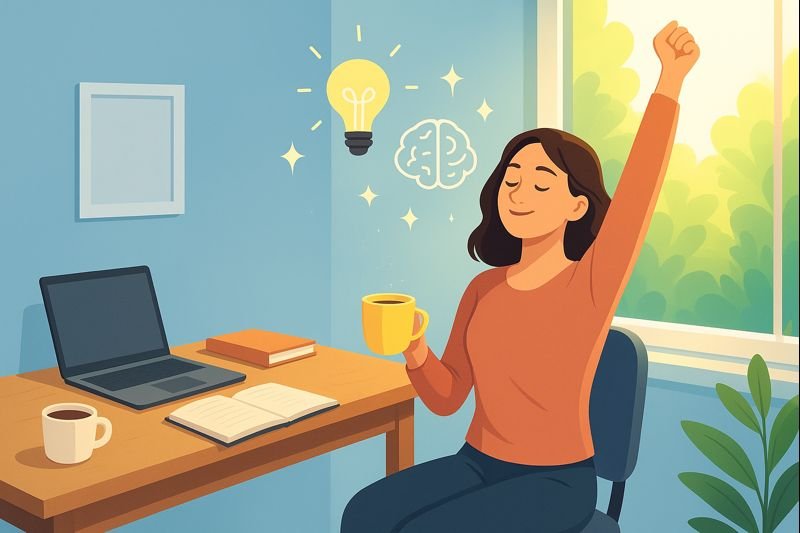
Research in ergonomics shows that micro-breaks prevent musculoskeletal discomfort and help maintain circulation. Beyond physical benefits, micro-breaks also help the brain reset momentarily. When you step away from a task—even for a few seconds—your mind gets a quick chance to “catch up,” clearing minor cognitive fatigue before it builds into something bigger.
The beauty of micro-breaks is that they’re effortless to implement. You don’t need to leave your desk or disrupt your workflow. Simple actions like closing your eyes for a breath, looking out a window, or gently stretching your neck and shoulders can make a measurable difference in alertness and attention span.
Short Breaks (5–15 Minutes)
Short breaks are slightly longer and offer deeper benefits. Stepping away from your desk for 5 to 15 minutes allows you to reset attention, improve decision-making, and restore mental energy. Cognitive psychologists have found that even a 10-minute break during intense mental work improves subsequent task performance significantly.
During this time, your brain can engage in different processes, such as mind-wandering or visual relaxation, which promotes creativity and problem-solving. Activities like taking a walk, having a cup of tea, or doing a few stretches are ideal. Short breaks are also effective for preventing mental fatigue and reducing the negative impact of prolonged screen exposure, which is especially relevant in today’s digital-heavy work environment.
Long Breaks (Lunch and Midday Rest)
Long breaks, such as lunch or a midday rest, are critical for restoring energy for the second half of the day. Studies show that individuals who skip lunch or work straight through often experience cognitive decline by early afternoon. Longer breaks allow for more complete recovery of attention, decision-making capacity, and even mood.
A proper long break doesn’t mean bingeing on social media—it’s about giving your brain an actual reset. Eating mindfully, stepping outside, or engaging in light exercise can recharge both body and mind. People who incorporate these long restorative periods consistently report higher productivity and greater satisfaction with their work.
How to Use Breaks the Right Way
The Pomodoro Technique
The Pomodoro Technique is a popular productivity method based on alternating work and break intervals. Typically, you work for 25 minutes and then take a 5-minute break. After four cycles, you take a longer 15–30 minute break.
This method leverages research on ultradian cycles—natural fluctuations in energy and attention—ensuring your brain gets recovery time before fatigue sets in. By structuring work and rest intentionally, the Pomodoro Technique not only improves focus but also reduces the mental friction associated with task-switching. Many professionals find it dramatically increases sustained productivity over long workdays.
Taking Movement Breaks
Movement breaks are more than just stretching—they actively boost cognition. Walking, light exercise, or even standing and pacing improves blood flow to the brain, delivering oxygen and nutrients that enhance focus and memory.
A Stanford study highlighted that walking increased creative output by around 60%, proving that simple motion can unlock problem-solving abilities. Incorporating 5–10 minute movement breaks every hour keeps your body active, reduces sedentary strain, and gives your brain a chance to process information differently.
Digital Detox Breaks to Reduce Overstimulation
In today’s work environment, constant notifications, emails, and social media can overwhelm your attention system. Digital detox breaks involve stepping away from screens completely, even if briefly.
Research in cognitive science indicates that constant digital stimulation leads to cognitive fatigue and reduces both attention and working memory. A short period offline, whether it’s a walk outside or simply closing your eyes and breathing, helps your mind recover and improves subsequent focus and productivity.
Common Myths About Breaks and Productivity
“Breaks Waste Time”
Many people assume taking breaks is wasted time. However, research consistently shows the opposite. Breaks restore mental energy, prevent errors, and enhance overall output. Without them, you might work longer but with lower quality. Taking a few minutes now can save hours of frustration and rework later.
“Real Productivity Means Working Nonstop”
This myth persists in high-pressure cultures, but nonstop work is counterproductive. Continuous work increases cognitive fatigue, reduces creativity, and elevates stress levels. Productivity isn’t about the number of hours worked—it’s about what you accomplish during those hours. Strategic breaks ensure your output is not only higher in quantity but also in quality.
“Breaks Are Only for When You’re Tired”
Waiting until you feel exhausted to rest is too late. Cognitive research shows that preemptive breaks — taken before fatigue sets in — are more effective at maintaining focus and preventing burnout. Think of it like refueling a car before the tank runs empty, rather than after being stranded on the highway.
Practical Tips to Make Breaks Work for You
Scheduling Breaks Into Your Workday
One of the simplest ways to ensure you benefit from breaks is to schedule them. Setting alarms, using productivity apps, or incorporating structured techniques like Pomodoro can prevent you from forgetting to step away. A consistent schedule trains your brain to expect recovery periods, improving overall efficiency.
Using Breaks to Reset Your Energy
Use breaks intentionally to recharge, not just for distraction. Stand, stretch, meditate, or walk outside. Mindful activities that shift attention away from work tasks help your brain replenish energy stores. When you return, you’ll find decisions easier, focus sharper, and problem-solving more fluid.
Building Healthy Rest Habits
Consistency is key. Make breaks a natural part of your workflow rather than a sporadic indulgence. Keep your breaks purposeful and avoid defaulting to passive scrolling. Over time, your brain adapts to these patterns, improving sustained attention, creativity, and resilience against burnout. Healthy break habits are an investment in your long-term productivity and well-being.
Conclusion
In conclusion, taking breaks isn’t a sign of laziness — it’s a proven strategy for enhancing focus, creativity, and overall productivity. From micro-breaks that last mere seconds to long midday rests, each type of pause serves a distinct purpose in recharging your brain and body. Science shows that our attention naturally fluctuates, and without planned recovery periods, performance, decision-making, and creativity suffer. By understanding the different ways breaks improve mental and physical function, you can work smarter, not harder, and achieve more in less time.
The final thought is simple: productivity isn’t measured by the hours you spend at your desk, but by the quality of your work and the sustainability of your energy. Strategic breaks are essential tools that help maintain focus, prevent burnout, and boost your ability to solve problems creatively. Incorporating mindful pauses into your daily routine transforms work from a constant grind into a balanced rhythm of effort and recovery. Remember, the most productive people don’t just work hard—they rest smart.
FAQs
1. Why do breaks make me more productive?
Breaks give your brain a chance to rest, reset, and process information. Short pauses prevent mental fatigue, improve focus, and even boost creativity, allowing you to return to work sharper and more efficient.
2. How long should I take a break for maximum productivity?
It depends on the type of break. Micro-breaks last 30 seconds to 2 minutes, short breaks are 5–15 minutes, and long breaks like lunch can be 30 minutes or more. Combining all types throughout your day keeps your energy and focus balanced.
3. Can walking or moving during breaks really help?
Yes! Studies show that walking or light exercise during breaks increases blood flow to the brain, enhances memory, and improves creative thinking. Even a short stroll can unlock ideas you might have missed sitting at your desk.
4. Is it better to take breaks when I feel tired, or should I plan them?
Planning breaks in advance is more effective than waiting until you feel tired. Scheduled pauses prevent fatigue before it starts and help maintain consistent focus throughout the day.
5. Won’t breaks make me lose time?
Not at all. Taking breaks strategically actually saves time in the long run by reducing errors, improving decision-making, and boosting productivity. Think of breaks as an investment in higher-quality work rather than lost time.
6. Can digital detox breaks really improve focus?
Absolutely. Stepping away from screens reduces cognitive overload and mental fatigue. Even a few minutes away from notifications, emails, and social media helps your brain recharge and improves attention when you return to work.
7. What is the best technique to structure my work and breaks?
Methods like the Pomodoro Technique are very effective. By working in focused intervals (typically 25 minutes) followed by short breaks, you align with your brain’s natural energy cycles, maintaining attention and preventing burnout.
Further Reading
- “The Productivity Boost of Short Breaks” – Harvard Business Review
Explores how micro-breaks and short pauses improve focus, creativity, and overall performance.
https://hbr.org/2017/08/the-productivity-boost-of-short-breaks - “Attention Restoration Theory: Science Behind Mental Breaks” – American Psychological Association
Covers the research on how mental rest and exposure to restorative environments enhance cognitive function.
https://www.apa.org/news/press/releases/2015/10/mental-breaks - “Walking Improves Creative Thinking” – Stanford University Study
Demonstrates the connection between movement, blood flow, and creativity.
https://news.stanford.edu/2014/04/24/walking-boosts-creativity-042414/ - “Why We Need to Rest: The Science of Recovery” – Psychology Today
Discusses how breaks, naps, and downtime impact mental performance and productivity.
https://www.psychologytoday.com/us/blog/the-athletes-way/201809/why-we-need-rest - “Pomodoro Technique: Using Time Blocks for Focus and Efficiency” – Francesco Cirillo
A practical guide to structuring work and breaks for sustained productivity.
https://francescocirillo.com/pages/pomodoro-technique - “Cognitive Fatigue and the Cost of Continuous Work” – Frontiers in Human Neuroscience
An academic article on how sustained mental work leads to fatigue and decreased output.
https://www.frontiersin.org/articles/10.3389/fnhum.2014.00382/full - “Digital Detox: How Screen-Free Time Boosts Brain Function” – University of Sussex Study
Highlights the benefits of unplugging from devices for cognitive recovery.
https://www.sussex.ac.uk/news/media-centre/2020/june/digital-detox