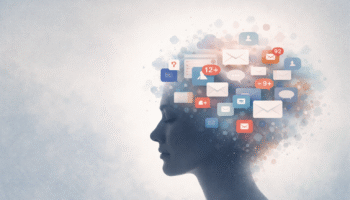
Scrolling endlessly through social media, news feeds, or short-form videos can feel like second nature. Yet many of us experience a subtle, creeping sense of exhaustion that isn’t caused by physical activity—digital overwhelm that leaves the mind fuzzy, focus scattered, and motivation low.
This phenomenon, commonly known as scroll fatigue, is real and increasingly common, as smartphones, apps, and content algorithms push for constant engagement. Recognizing scroll fatigue is the first step toward managing it, protecting your energy, and reclaiming your attention in a hyperconnected world.
Table of Contents
What is scroll fatigue?
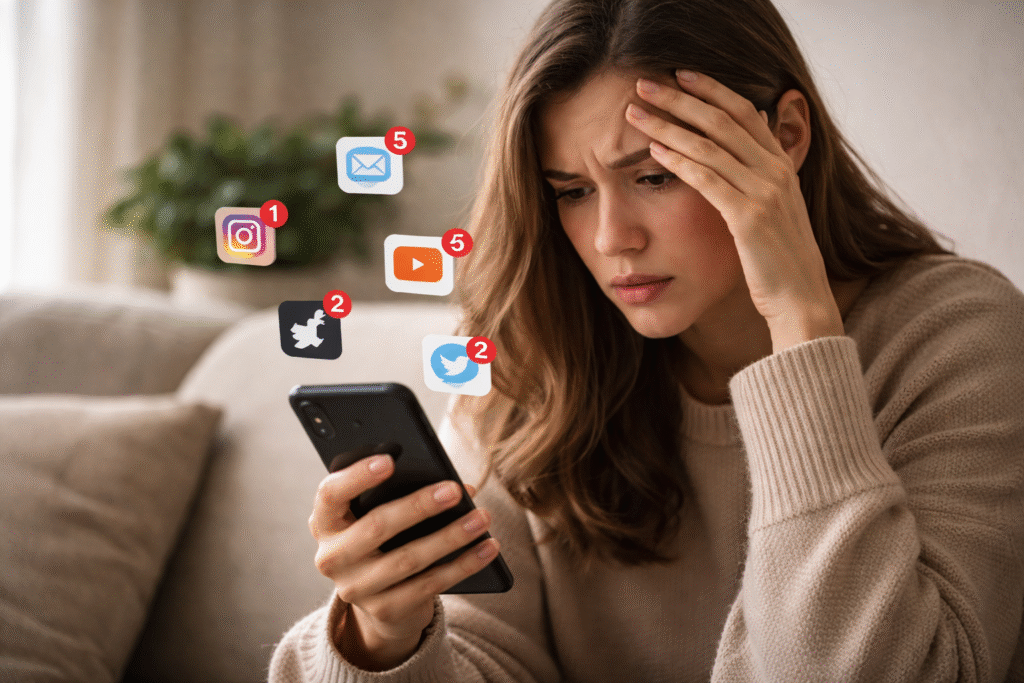
Scroll fatigue describes the mental and emotional exhaustion that arises from prolonged, passive engagement with digital content. Unlike traditional stress, which stems from tasks, deadlines, or interpersonal conflict, scroll fatigue originates in the interaction itself—an endless loop of scrolling that demands attention without meaningful cognitive payoff.
- Mental depletion: Constant exposure to new content—posts, notifications, or trending videos—creates small bursts of cognitive processing that accumulate over time. Even brief, seemingly harmless scrolling sessions can leave the brain feeling drained.
- Emotional overload: Social media and news feeds mix positive and negative stimuli rapidly, triggering emotional responses that tax the nervous system. Over time, this can reduce motivation, increase irritability, and dull the pleasure of activities offline.
- Attention fragmentation: Scroll fatigue disrupts sustained focus. When attention continually shifts from post to post, the brain struggles to maintain deep engagement, leading to feelings of fogginess and mental fuzziness.
Understanding scroll fatigue as a unique type of cognitive strain helps us see why it can feel so insidious. Unlike tiredness from work or physical activity, scroll fatigue often sneaks up, leaving users unaware of the subtle depletion until it manifests in frustration, distraction, or digital avoidance.
Want to understand why late-night scrolling makes you drowsy? Check out our guide on Why Does Scrolling Make Me Sleepy to learn how phone use affects your brain and energy levels.”
How scroll fatigue builds over time
Scroll fatigue doesn’t appear instantly; it accumulates as our brains respond to prolonged cognitive load and novelty loops created by apps and platforms.
Recognizing the stages can help in identifying early signs before it affects overall well-being.
- Cognitive load accumulation: Each post or video, even short-form content, demands mental processing. Your brain evaluates images, text, captions, and social cues while keeping track of context. The cumulative load can leave your executive functions taxed, reducing decision-making capacity and memory recall.
- Novelty loops and dopamine spikes: Platforms are designed to keep you engaged through novelty—new posts, trending videos, and recommended content. Each micro-hit of dopamine feels rewarding, yet over time, the constant stimulation becomes draining rather than energizing.
- Attention depletion: Extended scrolling sessions fragment attention. The brain is trained to expect constant updates, making offline tasks feel dull and increasing difficulty in sustaining focus for work or study.
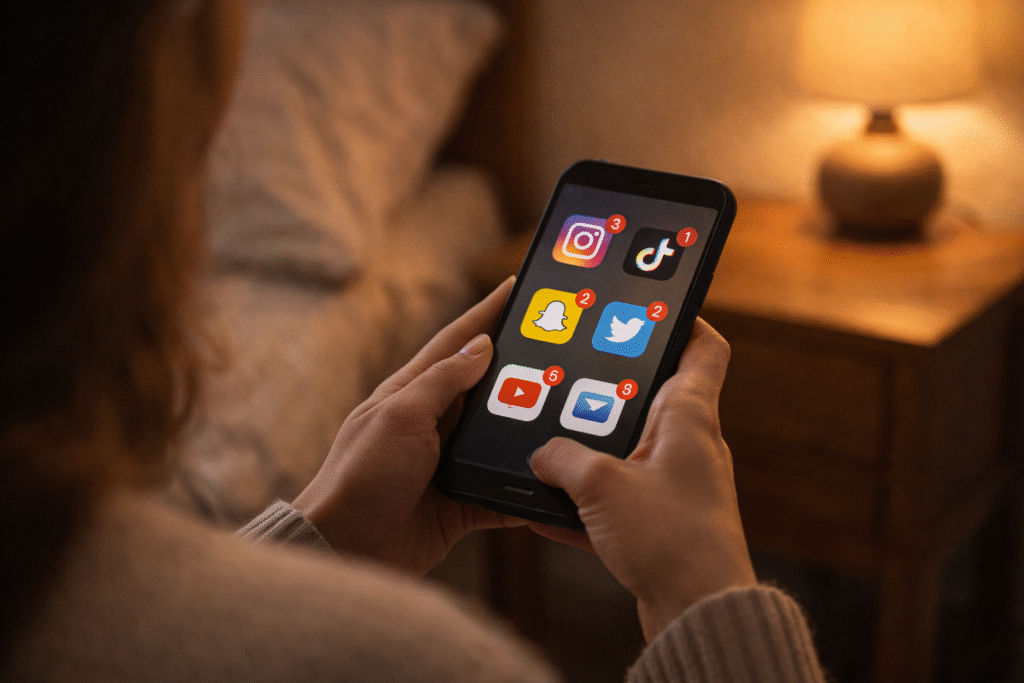
In real-world examples, a person checking Instagram during breakfast, refreshing Twitter at work breaks, and ending the day on TikTok can experience a subtle erosion of mental energy. Individually, these moments may seem harmless, but cumulatively they contribute to a pervasive sense of exhaustion, which is the hallmark of scroll fatigue.
Examples from social media, news feeds, and short-form content
Scroll fatigue is amplified by the types of content we engage with and how frequently.
- Social media feeds: Instagram and Facebook encourage endless browsing. Each post offers visual and emotional cues, prompting brief bursts of engagement but little cognitive payoff.
- News feeds: Constant updates about global events, trending stories, or push notifications activate stress responses and require emotional processing, even when the user is only skimming headlines.
- Short-form video platforms: TikTok, YouTube Shorts, and similar platforms use rapid loops of engaging content, keeping attention on low-effort entertainment. The novelty can be stimulating, yet the constant transitions between videos strain attentional resources.
These patterns illustrate how modern digital environments create the perfect conditions for cumulative fatigue. Even highly engaging content may contribute to exhaustion if it leaves little room for sustained cognitive rest or reflection.
Early vs Advanced Signs of Scroll Fatigue
Recognizing scroll fatigue is easier when you understand its progression. Early signs may seem minor, while advanced signs can significantly impact productivity and mental well-being.
| Stage | Early Signs | Advanced Signs |
|---|---|---|
| Mental | Mild fogginess, slight distraction, reduced focus | Persistent cognitive sluggishness, difficulty problem-solving, forgetfulness |
| Emotional | Irritation, impatience with content, fleeting anxiety | Heightened anxiety, low mood, reduced enjoyment in offline activities |
| Behavioral | Frequent app switching, slight procrastination | Avoidance of tasks, compulsive scrolling, disrupted sleep patterns |
| Physical | Eye strain, subtle tension in neck or shoulders | Headaches, fatigue, disrupted circadian rhythms |

Understanding these signs allows users to intervene before fatigue becomes chronic, preserving attention, emotional balance, and energy for offline priorities.
Practical ways to reduce scroll fatigue without drastic detoxes
Reducing scroll fatigue doesn’t mean abandoning your phone or social media entirely. Small, intentional changes can preserve mental energy while still allowing you to enjoy digital content.
- Set micro-boundaries: Limit scrolling sessions to 10–15 minutes, especially during work breaks or late evenings. Short, intentional sessions prevent cognitive overload.
- Silence notifications: Reducing constant pings removes the subconscious pull to check apps, allowing you to focus on meaningful tasks.
- Curate content: Unfollow accounts that trigger stress or unnecessary comparison. Follow content that provides value or relaxation.
- Scheduled digital pauses: Take short, device-free moments to stretch, hydrate, or practice mindful breathing between scrolling sessions.
- Switch modalities: Replace some scrolling with reading a book, listening to a podcast, or engaging in offline hobbies to reset attention circuits.
These small steps help reclaim focus and reduce fatigue without the stress of a full digital detox.
Healthy breaks vs. avoidance scrolling
Not all breaks from work or tasks are equal. Healthy breaks restore attention, while avoidance scrolling often deepens fatigue.
- Healthy breaks: Activities like standing up, stretching, brief walks, or meditative breathing reset cognitive resources and provide a sense of accomplishment.
- Avoidance scrolling: Mindless social media browsing or news-feed skimming can feel relaxing but often increases cognitive load, leaving you mentally drained.
The key difference is intention. Healthy breaks are deliberate, restorative, and limited. Avoidance scrolling is reactive, prolonged, and often leaves the mind feeling foggy.
Mistakes people make when trying to “fix” digital fatigue
Even with the best intentions, common missteps can worsen scroll fatigue:
- Overly strict detoxes: Completely abandoning digital tools can create stress, anxiety, or fear of missing out (FOMO). Balance is more effective than extremes.
- Ignoring triggers: Not identifying which apps or content cause fatigue can lead to repeated cycles of exhaustion.
- Multitasking during breaks: Checking emails, notifications, or news while supposedly “resting” prevents cognitive recovery.
- Expecting instant results: Scroll fatigue accumulates over time, so recovery requires patience and consistent, mindful habits.
Awareness of these mistakes allows for realistic, empowering strategies to maintain digital wellness.
Conclusion
Scroll fatigue is a modern challenge in our hyperconnected world, but it is manageable. By recognizing early signs, understanding how cognitive load and novelty loops affect attention, and implementing intentional habits, you can reclaim focus and mental clarity.
Healthy scrolling, mindful breaks, and small digital adjustments allow you to enjoy technology without succumbing to exhaustion. With consistent practice, you can maintain balance, protect your mental energy, and engage with digital life on your terms.
FAQ
1. What is scroll fatigue?
Scroll fatigue is mental and emotional exhaustion caused by prolonged, passive engagement with digital content. It often manifests as reduced focus, irritability, eye strain, or emotional depletion, even if you haven’t done physically demanding tasks.
2. How do I know if I’m experiencing scroll fatigue?
Early signs include mild distraction, eye strain, or mental fog. Advanced signs can involve persistent cognitive sluggishness, emotional irritability, compulsive scrolling, and reduced enjoyment of offline activities.
3. Can I prevent scroll fatigue without stopping all digital use?
Yes. Setting time limits, curating content, silencing notifications, taking short offline breaks, and practicing mindful scrolling can reduce fatigue while allowing continued engagement with apps and social media.
4. What’s the difference between healthy breaks and avoidance scrolling?
Healthy breaks reset cognitive resources through intentional, restorative actions like stretching or walking. Avoidance scrolling is reactive, prolonged, and mentally taxing, often leaving attention fragmented instead of restored.
5. Are certain types of content more likely to cause scroll fatigue?
Yes. Highly engaging, emotionally charged, or rapidly updated feeds—like short-form videos, news, and trending social media posts—create novelty loops and repeated cognitive load, increasing fatigue over time.
6. How long does it take to recover from scroll fatigue?
Recovery varies but generally requires consistent, mindful habits over days or weeks. Small, intentional breaks, limited scrolling sessions, and restorative offline activities accelerate recovery and help prevent future fatigue.
7. Can scroll fatigue affect my productivity?
Absolutely. Reduced focus, mental fog, and attention fragmentation from prolonged scrolling can impair work performance, decision-making, and task completion, especially in remote work or study environments where self-regulation is essential.
Helpful Resources
- National Institutes of Health – Attention and Cognitive Load Studies, https://www.nih.gov
- Journal of Experimental Psychology: Applied, “Effects of Social Media Use on Cognitive Fatigue,” 2025
- Harvard University, Center for Brain Science – Digital Attention and Fatigue Research, https://cbs.fas.harvard.edu
- National Institute for Occupational Safety and Health – Technology Use and Worker Fatigue, https://www.cdc.gov/niosh