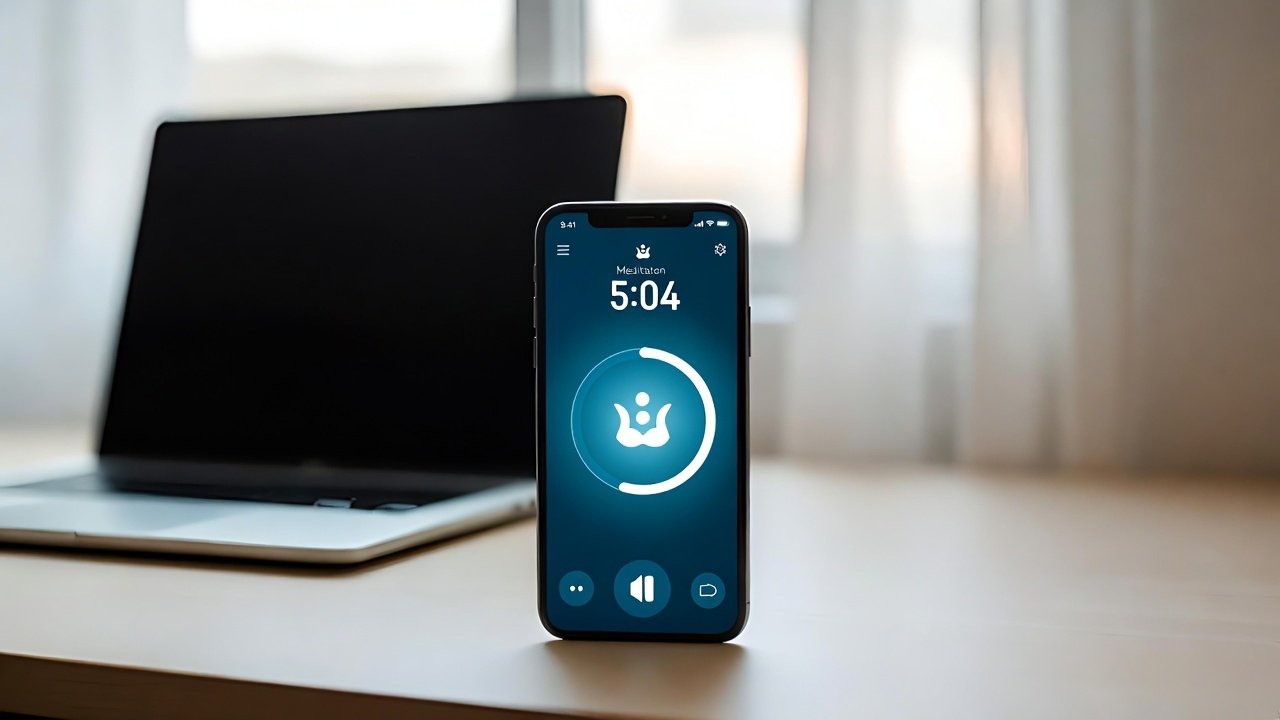
In 2026, our relationship with technology has matured—but it has also intensified. AI copilots summarize our emails. Smart assistants anticipate our needs. Wearables track our sleep, stress, and heart rate in real time. And yet, despite all this innovation, one challenge remains: maintaining clarity and calm in a hyperconnected world.
The modern digital lifestyle isn’t just fast—it’s relentless.
Notifications are smarter. Content is more personalized. Work and social life blend seamlessly across devices. Without intentional boundaries, the result is cognitive fatigue, reduced focus, and emotional overload.
But here’s the shift happening in 2026: technology is no longer just a source of distraction—it’s increasingly a tool for restoration.
A new generation of mindful apps is emerging. These tools are designed not to hook you, but to help you pause. Not to stimulate endlessly, but to create intentional space. They help you reflect before reacting, reset your nervous system, and rebuild attention strength.
This article explores why mindful apps are becoming essential in 2026—and which ones can genuinely help you pause, reflect, and reset in daily life.
Table of Contents
Why Mindful Apps Are Key for 2026 Digital Lifestyles
The digital landscape has changed dramatically over the past few years.
We are no longer just managing screen time. We are managing:
- AI-driven productivity tools
- Hybrid and remote work environments
- Algorithm-optimized content feeds
- Continuous communication across platforms
The challenge isn’t technology itself—it’s unregulated engagement.
The Attention Economy Is More Intelligent
In 2026, apps don’t just send notifications. They predict when you’re most likely to respond. They learn your behavioral patterns. They optimize timing and content to maximize engagement.
Without countermeasures, this can erode:
- Deep focus capacity
- Emotional regulation
- Sleep hygiene
- Decision-making quality
Mindful apps act as stabilizers in this environment. Instead of competing for attention, they protect it.
Mindful Apps Support Three Core Needs
1. Cognitive Reset
Short guided breathing sessions or timed focus intervals help interrupt overstimulation cycles.
2. Emotional Regulation
Reflection prompts and mood tracking encourage awareness instead of reactivity.
3. Structured Focus
Digital boundaries supported by timers and blockers reduce task-switching.
In short, mindful apps provide scaffolding for intentional digital living.
They don’t remove technology from your life—they rebalance it.
Top Mindful Apps to Pause, Reflect, and Reset
Let’s explore some of the most effective categories of mindful apps shaping digital wellness in 2026. Instead of listing dozens of options, we’ll focus on tools that are practical, realistic, and sustainable.
1. Headspace (Meditation & Mental Clarity)
One of the pioneers in guided meditation, Headspace continues to evolve in 2026 with AI-personalized sessions.
Key Features
- 3–20 minute guided meditations
- Focus music for deep work
- Sleep wind-down programs
- Mood-based session recommendations
Pros
- Beginner-friendly
- Structured programs for consistency
- Scientifically grounded approach
Practical Use Case
You start your morning with a 5-minute breathing session before checking emails. Midday, you use a 10-minute “reset” session after back-to-back meetings. At night, you activate a sleep wind-down track instead of scrolling social media.
The key isn’t long meditation—it’s micro-pauses embedded into daily routines.
2. Forest (Focus Through Gamification)
Forest takes a different approach. Instead of meditation, it uses behavioral psychology and gamification.
When you start a focus session, a virtual tree begins growing. If you leave the app to scroll social media, the tree dies.
Key Features
- Customizable focus timers
- Visual growth tracking
- Long-term focus statistics
- Optional real-world tree planting partnerships
Pros
- Engaging and simple
- Reduces phone checking
- Builds accountability
Practical Use Case
During a 45-minute deep work session, you activate Forest. The visual commitment reduces the temptation to check notifications. Over weeks, you see a “forest” of completed sessions—a visual representation of regained focus.
It turns attention into something tangible.
3. One Sec (Impulse Interruption Tool)
One of the most innovative tools of 2026 is the impulse-interruption app.
One Sec intervenes when you try to open a distracting app. Instead of instantly launching it, the app pauses and asks you to take a breath.
Key Features
- Delayed app opening
- Short breathing prompts
- Usage analytics
- Customizable friction levels
Pros
- Minimalistic
- Highly effective against compulsive habits
- Encourages reflection without full restriction
Practical Use Case
You tap Instagram automatically. Instead of opening immediately, you’re prompted to inhale slowly. That brief interruption often breaks the automatic loop. You may still open the app—but now it’s intentional.
Mindful tech isn’t about banning behavior. It’s about inserting awareness between impulse and action.
4. Insight Timer (Free Meditation & Community)
For those seeking variety and depth, Insight Timer offers thousands of free meditations, music tracks, and reflection talks.
Key Features
- Large global library
- Live meditation events
- Community groups
- Custom timer with interval bells
Pros
- Free access to extensive content
- Wide range of teachers and styles
- Strong community engagement
Practical Use Case
After a stressful day, instead of venting online, you join a live 15-minute grounding session. You log your mood afterward and notice patterns over time.
The app becomes a digital sanctuary rather than a digital stressor.
5. Freedom (Cross-Device Focus Blocking)
For professionals working across laptops, tablets, and phones, Freedom blocks distracting websites and apps across devices simultaneously.
Key Features
- Scheduled blocking sessions
- Cross-device syncing
- Custom block lists
- Locked mode (cannot cancel mid-session)
Pros
- Powerful for deep work
- Reduces multitasking temptation
- Excellent for remote workers
Practical Use Case
You schedule distraction blocking every weekday from 9:00 a.m. to 11:00 a.m. During that time, news sites and social media are inaccessible. Over time, your brain associates those hours with focused output.
Consistency builds cognitive resilience.
6. Reflectly (Digital Journaling & Emotional Awareness)
Reflection is often missing in fast-paced digital environments. Reflectly introduces AI-guided journaling prompts to help users process thoughts and emotions.
Key Features
- Daily reflection prompts
- Mood tracking
- Guided cognitive reframing
- Streak-based habit tracking
Pros
- Encourages emotional processing
- Quick daily format
- Private and structured
Practical Use Case
At the end of the day, instead of scrolling aimlessly, you spend 5 minutes answering a prompt like:
“What energized you today? What drained you?”
That small shift turns passive consumption into active reflection.
Choosing the Right Mindful Apps for You
The goal is not to install all of these.
Too many apps—even wellness ones—create clutter.
Instead:
- Choose one meditation tool
- One focus timer or blocker
- One reflection habit
That’s enough to create a powerful digital reset system.
Mindful tech in 2026 isn’t about perfection. It’s about intentional integration. When you design your digital ecosystem thoughtfully, apps become allies—not adversaries.
Integrating Mindful Apps Into Daily Tech Habits
Downloading a mindful app is the easy part. The real transformation happens when those tools become part of your daily rhythm rather than occasional experiments. In 2026, sustainable digital wellness is built on integration, not intensity. The most effective approach is to attach mindful apps to routines that already exist in your day. When a behavior is anchored to a consistent cue, it becomes automatic and less dependent on motivation.
For example, instead of vaguely planning to meditate “sometime,” you might commit to a three-minute breathing session immediately after brushing your teeth each morning. Before opening email, you could activate a 25-minute focus timer. After lunch, you might schedule a short distraction-free work sprint. Before bed, a five-minute journaling session can replace late-night scrolling. These small transitions create psychological boundaries between tasks and prevent your day from dissolving into continuous digital input.
Mindful apps should act as bridges into presence, not substitutes for endless screen engagement. A meditation session should end with you putting the phone down. A focus blocker should help you move attention toward meaningful work, not into another productivity dashboard. Journaling digitally should close with device shutdown, not further browsing. The intention is to reduce stimulation and mental fragmentation, not to introduce another layer of it.
A practical method many people find helpful is creating a simple “pause protocol.” Whenever you feel the urge to check your phone, take one breath and ask, “What do I actually need right now?” Sometimes the answer is connection or information. Other times it is rest, hydration, or clarity. This small interruption builds awareness between impulse and action. Over time, that awareness becomes more powerful than any app itself.
Avoiding App Overload While Practicing Mindful Tech
There is a subtle trap within digital wellness culture: trying to optimize everything. In 2026, productivity and wellness tools are sophisticated, personalized, and gamified. You can track meditation streaks, focus sessions, journaling frequency, sleep cycles, and mood metrics. While data can be useful, too much tracking can quietly become another source of stress.
To avoid app overload, limit yourself to a small, intentional set of tools. A sustainable system might include one meditation or breathing app, one focus timer or website blocker, and optionally one reflection or journaling tool. Beyond that, evaluate carefully. If an app adds complexity instead of clarity, it likely does not belong in your mindful tech routine.
It is also helpful to review your system periodically rather than constantly adjusting it. A quarterly reflection is often sufficient. Ask yourself whether you are using the app consistently, whether it reduces stress or increases it, and whether it aligns with your current life demands. Technology should adapt to your season of life, not pressure you into rigid adherence.
Another common issue is “streak anxiety.” Many apps encourage daily consistency through streak counters. While this can build momentum, it can also create guilt when a day is missed. Missing a session does not erase progress. Mindful tech is grounded in awareness, not perfection. If a tool starts generating pressure rather than support, simplify.
Ultimately, mindful apps are meant to restore agency. If they begin to feel compulsory, they need to be re-evaluated.
Building a Sustainable 2026 Mindful Tech Routine
Sustainability depends on consistency, environment, and intention. Consistency matters more than intensity. A five-minute daily breathing session can reshape stress responses more effectively than occasional long meditations. Short focus blocks practiced daily rebuild attention endurance. Small journaling habits accumulate into deeper emotional clarity over time.
Environment design reinforces these practices. Placing your phone face-down during work sessions, keeping only essential apps visible on your home screen, or charging devices outside the bedroom strengthens digital boundaries. Apps function best when paired with physical cues that support intentional use.
Intention before interaction may be the most powerful practice of all. Before unlocking your device, pause briefly and decide what you are about to do. This single moment of clarity dramatically reduces unconscious scrolling. In a world where digital systems are designed to capture attention, consciously directing your own attention becomes a defining skill.
In 2026, the advantage does not belong to those who multitask endlessly. It belongs to those who protect their cognitive energy and engage technology deliberately.
Conclusion: Sustainable Mindful Tech in 2026
Technology will continue to evolve. Artificial intelligence will become more predictive. Work will remain digitally integrated. Notifications will grow smarter. But your ability to choose how you engage with these systems can grow stronger too.
Mindful apps provide structured pauses in a fast-moving environment. They help you interrupt reactive habits, process emotions more clearly, and create focused work sessions without constant distraction. However, their effectiveness depends on intentional integration and simplicity.
If you want a clear starting point, begin with one meditation or breathing tool, schedule one daily focus block, and introduce one short reflection habit before bed. Turn off non-essential notifications and revisit your system after thirty days. Adjust gently rather than overhauling everything at once.
Mindful tech is not about rejecting innovation. It is about ensuring that innovation does not erode your clarity. The goal is not to escape digital life but to engage with it consciously. When you pause, reflect, and reset regularly, technology becomes a tool that serves your values instead of scattering your attention.
In 2026, attention is one of your most valuable resources. Protect it with intention.
Frequently Asked Questions (FAQ)
1. What is mindful tech in 2026?
Mindful tech in 2026 refers to the intentional use of digital tools and apps that promote focus, reflection, emotional regulation, and reduced screen time. Instead of maximizing engagement, these tools encourage structured pauses, healthier routines, and balanced interaction with devices.
2. Do mindful apps really help reduce screen time?
Yes, when combined with behavioral awareness. Focus blockers, impulse-delay apps, and meditation tools interrupt automatic habits and reduce compulsive scrolling. However, they are most effective when paired with notification management and physical device boundaries.
3. Can mindful apps improve productivity?
Mindful apps can significantly improve productivity by protecting deep work sessions and reducing multitasking. Structured focus timers and distraction blockers strengthen concentration and reduce cognitive fatigue, leading to higher-quality output over time.
4. How many mindful apps should I use?
For most people, two or three core tools are sufficient. One for meditation or breathing, one for focus management, and optionally one for journaling or reflection. Adding too many tools can create digital clutter and undermine simplicity.
5. Are mindful apps suitable for remote workers?
Yes. Remote workers often face blurred boundaries between work and personal life. Mindful apps help structure the day, protect focused work blocks, and establish shutdown routines that reduce burnout and digital fatigue.
6. Is mindful tech the same as a digital detox?
No. A digital detox typically involves temporary disconnection from devices. Mindful tech focuses on sustainable, long-term digital habits that improve balance without eliminating technology from daily life.
Helpful Resources
World Health Organization (WHO) – Digital Health and Mental Wellbeing
https://www.who.int/health-topics/digital-health