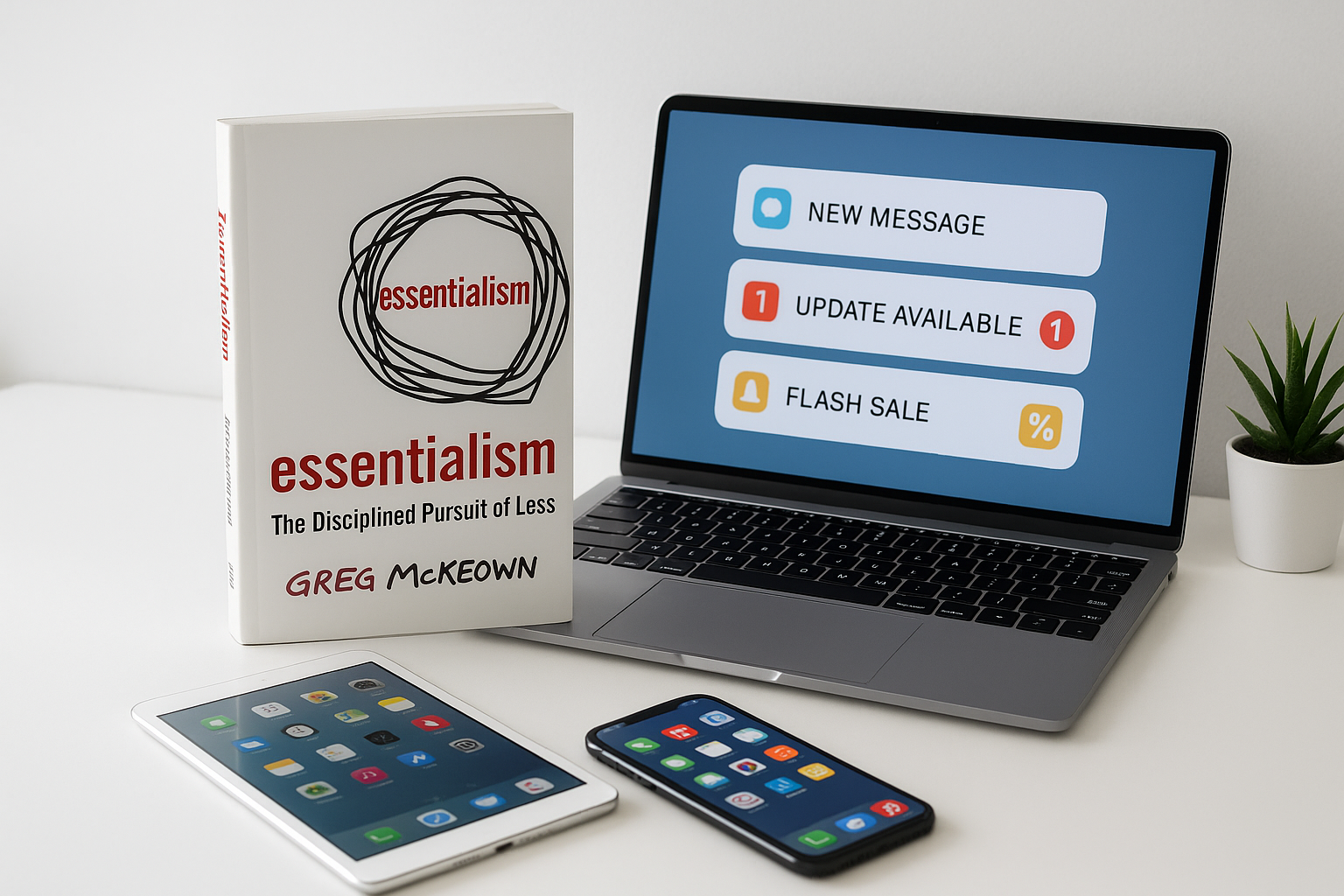
Essentialism by Greg McKeown offers a transformative approach for navigating today’s digital age, where technology can both empower and overwhelm us. Smartphones buzz relentlessly, emails pile up, social media demands our attention, and apps compete for every second of our day. Amid this digital chaos, the pressing question becomes: how can we regain control over our time, energy, and focus?
Greg McKeown’s book, “Essentialism: The Disciplined Pursuit of Less”, provides a transformative answer. This book will change how you use tech forever, teaching you to focus on what truly matters and cut out the noise that hinders productivity.
In this review, we’ll explore the core concepts of Essentialism, its application to technology, and practical steps you can take to implement its lessons in your digital life. Whether you’re a tech enthusiast, a professional struggling with digital distractions, or someone seeking more focus in a busy world, this guide will show why Essentialism is a must-read.
Table of Contents
What is Essentialism?
The Core Concept
At its heart, Essentialism is the art of discerning what is essential and eliminating what is not. McKeown defines it as “the disciplined pursuit of less but better.” Unlike multitasking or trying to do everything, Essentialism teaches that true success and satisfaction come from concentrating on the few things that truly matter. It’s not about doing more faster—it’s about doing less, but achieving far greater impact.
The philosophy of Essentialism extends beyond time management; it’s a mindset shift. It challenges the cultural pressure to say yes to every opportunity, attend every meeting, and respond to every notification. By applying Essentialist principles, individuals can regain control over their energy, decisions, and focus.
Why It Matters in a Tech-Heavy World
The digital world is filled with distractions. Social media notifications, endless email chains, instant messages, and new apps constantly compete for our attention. Technology, while designed to simplify life, often leads to information overload and stress. Many of us spend hours each day reacting to digital demands rather than focusing on meaningful work.
Essentialism provides a framework to combat this modern dilemma. It teaches that every notification, app, and online task should be evaluated based on its true importance. By prioritizing what matters, we can reduce mental clutter, enhance productivity, and regain a sense of control over our tech-driven lives.
How Essentialism Changes Your Approach to Technology
Prioritizing Digital Tasks
One of the most practical lessons in Essentialism is learning to prioritize. Not all digital tasks are created equal. Some emails, apps, or notifications may seem urgent, but they offer little real value. Essentialism encourages a critical assessment of every tech-related activity.
By prioritizing high-impact tasks, such as responding to key emails, completing essential projects, or engaging meaningfully on professional networks, you can make technology work for you instead of allowing it to dictate your day. This is a shift from being reactive to being proactive in your digital life.
Saying No to Non-Essential Digital Noise
The ability to say no is central to the Essentialist mindset. McKeown emphasizes that every yes to a non-essential task is a silent no to something truly important. In the tech world, this means unsubscribing from unnecessary newsletters, turning off push notifications, and avoiding apps that waste time.
By removing non-essential digital distractions, you free up mental space and time for activities that genuinely contribute to your goals. Saying no is not about being lazy; it’s about making intentional choices that maximize your impact.
Creating Focused Tech Routines
Essentialism also promotes structured routines to manage technology use. Instead of sporadically checking emails or scrolling social media, you can create designated tech times. For instance, responding to emails only at specific hours, batching social media interactions, or setting aside distraction-free periods for deep work.
Focused routines reduce cognitive load, minimize interruptions, and enhance productivity. Technology, when used intentionally, becomes a powerful tool rather than a source of stress.
Key Lessons from Essentialism by Greg McKeown for Tech Users
Less But Better
McKeown’s mantra, “less but better,” applies directly to technology. Instead of using every productivity app, subscribing to every platform, or attempting every new digital trend, focus on the tools that truly matter. Select apps, software, and devices that enhance your work, creativity, or personal growth.
For example, instead of juggling multiple project management tools, pick one that meets all your essential needs. By reducing tech clutter, you can spend more energy on what actually drives results.
Clarity is Power
Essentialism emphasizes clarity. When you are clear about your priorities, distractions lose their power. In a tech-heavy world, clarity means understanding which digital inputs align with your goals and which don’t.
Creating a clear tech strategy—knowing which apps, emails, or platforms deserve attention—helps reduce anxiety and decision fatigue. Clarity allows you to approach technology with purpose rather than habitually reacting to every ping.
Intentional Technology Use
Mindfulness is a recurring theme in Essentialism. Using technology intentionally means consciously deciding how, when, and why you engage with digital tools. It’s about focusing on quality interactions over quantity, whether that’s in emails, social media, or online research.
Intentional tech use encourages reflection. Before opening an app or responding to a notification, ask: “Does this align with my priorities?” This habit fosters discipline and ensures that technology serves your goals rather than undermines them.
Practical Tips to Apply Essentialism in Your Digital Life
Audit Your Digital Life
Start by conducting a digital audit. List all apps, subscriptions, emails, and online tools you regularly use. Identify which ones are essential and which are non-essential. Removing or minimizing non-essential tools immediately reduces clutter and stress.
This process can reveal surprising insights. You might discover apps you no longer need, emails that create unnecessary urgency, or online routines that consume excessive time without meaningful results.
Limit Notifications and Alerts
Notifications are one of the biggest sources of distraction. Essentialism advocates turning off non-critical alerts. Limit notifications to important emails, calendar reminders, or urgent communication channels.
Consider using “Do Not Disturb” modes during focused work sessions or creating separate devices for essential work versus leisure. By controlling notifications, you reclaim attention and mental energy.
Schedule Tech-Free Time
Designating tech-free periods is crucial for maintaining focus and mental clarity. Essentialism encourages setting boundaries for technology use, such as offline hours in the evening or distraction-free work blocks.
Tech-free time allows for reflection, deep thinking, and creative problem-solving. It strengthens your ability to focus when you are online and reduces the feeling of constant digital overwhelm.
Why Every Tech User Should Read Essentialism
In an era of digital saturation, Essentialism offers a roadmap to simplicity, focus, and intentional living. The book is not only about productivity but also about well-being, mental clarity, and purpose. For tech users, the lessons are particularly transformative.
By applying Essentialism principles, you can:
- Increase productivity without increasing effort.
- Reduce stress caused by constant digital distractions.
- Make intentional choices about technology use.
- Gain mental clarity and a sense of control over your digital environment.
- Focus on activities that truly create value and satisfaction.
Essentialism transforms the way we interact with technology, turning it from a source of overwhelm into a tool for achieving meaningful goals.
Conclusion
Greg McKeown’s Essentialism is more than a productivity book; it is a guide to living intentionally in a world full of distractions. By teaching the disciplined pursuit of less but better, it empowers readers to focus on what truly matters and eliminate the non-essential.
For anyone feeling overwhelmed by technology, constantly checking emails, juggling apps, or succumbing to social media distractions, this book provides actionable strategies to regain control. By prioritizing, saying no, and using technology intentionally, you can reclaim your time, energy, and focus.
If you want to enhance your digital life, reduce distraction, and improve productivity, Essentialism by Greg McKeown is a must-read. This book will change how you use tech forever.
FAQs About Essentialism by Greg McKeown and Tech Use
Can Essentialism help reduce smartphone addiction?
Yes. By teaching mindful and intentional technology use, Essentialism encourages setting boundaries, reducing notifications, and prioritizing essential digital activities, which can significantly reduce smartphone addiction.
How do I start applying Essentialism today?
Begin with a digital audit. Identify essential tools and tasks, remove distractions, limit notifications, and create focused tech routines. Start small, and gradually integrate Essentialism principles into your daily life.
Is Essentialism only about work productivity?
No. While Essentialism is highly effective for work productivity, its principles apply to all aspects of life, including personal relationships, hobbies, and digital habits. It’s about focusing on what truly matters in any area of life.
Does Essentialism require quitting all technology?
Absolutely not. Essentialism is about intentional use, not avoidance. It’s about using technology selectively and purposefully to maximize impact while reducing distraction.
Can Essentialism improve focus in a tech-heavy workplace?
Yes. By prioritizing essential tasks, minimizing interruptions, and creating structured work routines, Essentialism can significantly improve focus and efficiency in a workplace dominated by technology.