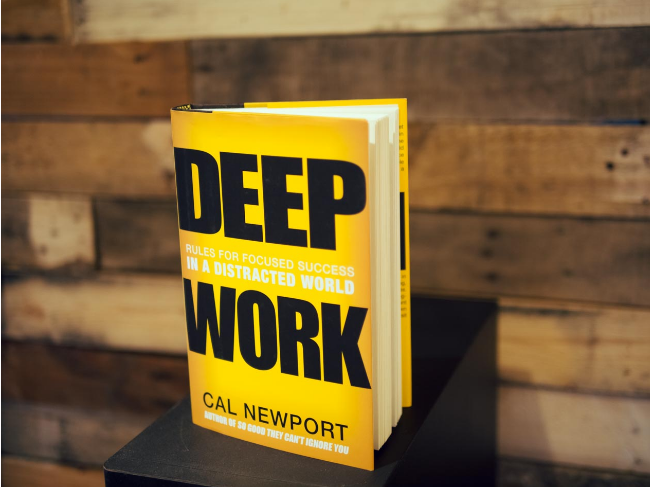
In a world where remote work has become the new normal—and digital distractions are louder than ever—Deep Work by Cal Newport stands out as one of the most important productivity books of the modern era. Newport argues that the ability to focus without distraction is becoming increasingly rare, even as it becomes more valuable in the digital economy. For remote workers juggling Slack messages, email pings, Zoom calls, and social media notifications, the ideas in Deep Work offer a roadmap for reclaiming attention, improving work quality, and reducing burnout.
Through a mix of science, real-world examples, and practical strategies, Deep Work by Cal Newport shows readers why deep, focused work is a superpower—and how cultivating it can transform your professional life.
This review explores the book’s key lessons and explains how remote workers can apply its principles to build mindful focus, increase productivity, and create healthier work routines.
Table of Contents
Overview of Deep Work by Cal Newport
Cal Newport, a computer science professor at Georgetown University, introduces the concept of Deep Work as the ability to engage in cognitively demanding tasks in a distraction-free environment. He contrasts this with “shallow work,” which includes tasks such as answering emails, attending unproductive meetings, or checking social media—activities that are low-value but often dominate a professional’s day.
“Clarity about what matters provides clarity about what does not.”
— Cal Newport, Deep Work
The book is divided into two parts: the first explains why deep work is valuable and rare in modern knowledge economies; the second offers actionable strategies to cultivate deep work habits. Newport argues that mastering deep work is akin to acquiring a superpower in a world increasingly addicted to shallow work.
For remote workers, this message resonates strongly. Unlike traditional office environments, remote work blurs boundaries between personal and professional life. While the flexibility can be liberating, it also creates fertile ground for distractions—from household chores to social media and messaging apps.
Newport’s principles serve as a guide to structure remote work in ways that maximize attention, creativity, and output.
Key Concepts for Remote Workers
1. Deep Work vs. Shallow Work
Newport’s core distinction is between deep work—focused, high-value, cognitively demanding tasks—and shallow work, which is often reactive, low-value, and distraction-heavy. Remote workers frequently fall into shallow work traps, answering emails immediately or checking Slack constantly, which interrupts the focus required for meaningful progress.
By categorizing tasks and prioritizing deep work, remote professionals can reclaim hours of lost productivity. Newport cites examples of high-performing individuals, from Carl Jung to Bill Gates, who structured their lives around uninterrupted periods of focus, producing transformative work. The message is clear: focus is more valuable than busyness.
2. The Value of Mindful Focus
A central theme of Deep Work is cultivating mindful focus—the ability to concentrate fully on one task without distraction. Newport draws on cognitive science research showing that humans cannot multitask effectively; frequent context-switching reduces cognitive performance and increases mental fatigue.
For remote workers, this principle is especially critical. Unlike office environments with predictable routines, home-based workspaces require deliberate structuring to support focus. Newport emphasizes that deep work is a skill that can be developed over time. By intentionally setting aside distraction-free periods, one can train the brain to achieve higher levels of concentration.
3. Time Blocking and Rituals
Newport advocates the use of time blocking: scheduling specific blocks for deep work while reserving other periods for shallow tasks. He also suggests creating rituals and routines around deep work—defining where, when, and how you will work—to reduce decision fatigue and make focused work automatic.
Remote workers can implement this by allocating morning hours for critical projects and afternoons for emails, meetings, or administrative tasks. For example, a remote software developer might block 9:00 AM to 12:00 PM for coding without interruptions, ensuring that the most cognitively demanding work happens during peak energy periods.
4. Embracing Boredom and Reducing Distractions
One of Newport’s more counterintuitive suggestions is to embrace boredom. He argues that constant stimulation—endless notifications, social media, and entertainment—undermines the brain’s ability to focus. Allowing periods of mental rest and resisting the urge to fill every idle moment with digital input strengthens concentration and creativity.
Remote workers can apply this by scheduling short breaks without screens or practicing “internet fasting” for blocks of time. Tools like Freedom, Forest, or Focus@Will can aid in reducing digital distractions, but Newport emphasizes that personal discipline is ultimately the most important factor.
5. The Four Rules of Deep Work
Newport provides four practical rules for cultivating deep work, which are highly relevant for remote professionals:
- Work Deeply: Create routines and rituals to sustain focus. For remote workers, this means dedicating specific periods to distraction-free work and using techniques like the Pomodoro method to maintain energy.
- Embrace Boredom: Train the mind to resist constant stimulation. Scheduled breaks and unplugged periods help reinforce attention control.
- Quit Social Media: Evaluate digital tools critically. Remote workers should question whether apps genuinely contribute to productivity or merely consume time.
- Drain the Shallows: Minimize low-value tasks. Newport encourages batching shallow work, such as emails, and delegating whenever possible, to prioritize high-impact activities.
By applying these rules, remote workers can reclaim focus, enhance cognitive performance, and produce more meaningful results.
Why This Book is a Must-Read for Remote Workers
Deep Work offers remote professionals a blueprint for navigating the unique challenges of working from home. The book addresses several critical issues:

- Distraction Management: Remote workers are surrounded by potential interruptions. Newport’s strategies provide concrete methods for minimizing these distractions.
- Productivity Optimization: Focusing on high-value tasks rather than reactive shallow work enables better output and faster skill acquisition.
- Work-Life Balance: By concentrating deeply on work during designated periods, remote professionals can finish tasks more efficiently, freeing personal time and reducing burnout.
- Professional Growth: Mastering deep work helps remote workers develop rare and valuable skills, setting them apart in competitive knowledge-based industries.
In essence, the book is not just about working harder—it’s about working smarter, more intentionally, and with purpose.
Critique and Limitations
While Deep Work by Cal Newport is highly praised, there are some considerations:
- Newport’s approach may feel rigid to some remote workers. Time blocking and strict routines require discipline that may not suit everyone’s lifestyle.
- The book focuses primarily on knowledge workers and may not directly apply to roles requiring constant collaboration or real-time responsiveness.
- Implementing all strategies simultaneously can feel overwhelming; a gradual adoption approach is recommended.
Despite these limitations, the book’s core principles are adaptable. Remote workers can selectively implement the rules that align with their specific context and gradually build a sustainable deep work practice.
Conclusion
Cal Newport’s Deep Work is an essential read for remote workers seeking to reclaim control over their attention and improve productivity. The book highlights a critical truth for the modern knowledge worker: mindful focus is more valuable than constant busyness.
By distinguishing deep work from shallow work, embracing boredom, scheduling distraction-free periods, and minimizing low-value digital activities, remote professionals can transform their work habits. The result is higher-quality output, faster task completion, reduced stress, and greater professional satisfaction.
For anyone navigating the challenges of remote work in a digital world, Deep Work offers actionable insights and a philosophy that can fundamentally reshape the way we approach work. In short, Newport doesn’t just teach us to work harder—he teaches us to work deeper.
Frequently Asked Questions
1. What is the main message of Deep Work by Cal Newport?
The book emphasizes the importance of distraction-free, high-focus work. Newport argues that deep work is rare yet incredibly valuable in today’s digital economy and that mastering it leads to higher productivity and better long-term career success.
2. How can remote workers apply the principles of Deep Work?
Remote workers can use time blocking, eliminate digital distractions, set work rituals, and designate deep work hours to stay focused. Tools like Freedom and Forest also help maintain concentration.
3. Is Deep Work realistic for people with busy schedules?
Yes. Newport argues that even short, structured blocks of deep work—60 to 90 minutes—can significantly boost performance. Consistency is more important than long sessions.
4. What are examples of shallow work?
Shallow work includes answering non-urgent emails, frequent Slack messaging, attending unnecessary meetings, and multitasking across administrative tasks.
5. Does Deep Work help reduce burnout?
Absolutely. Deep work reduces cognitive overload by minimizing constant task switching. It leads to a clearer mind, faster completion of tasks, and more free time—helping prevent burnout.