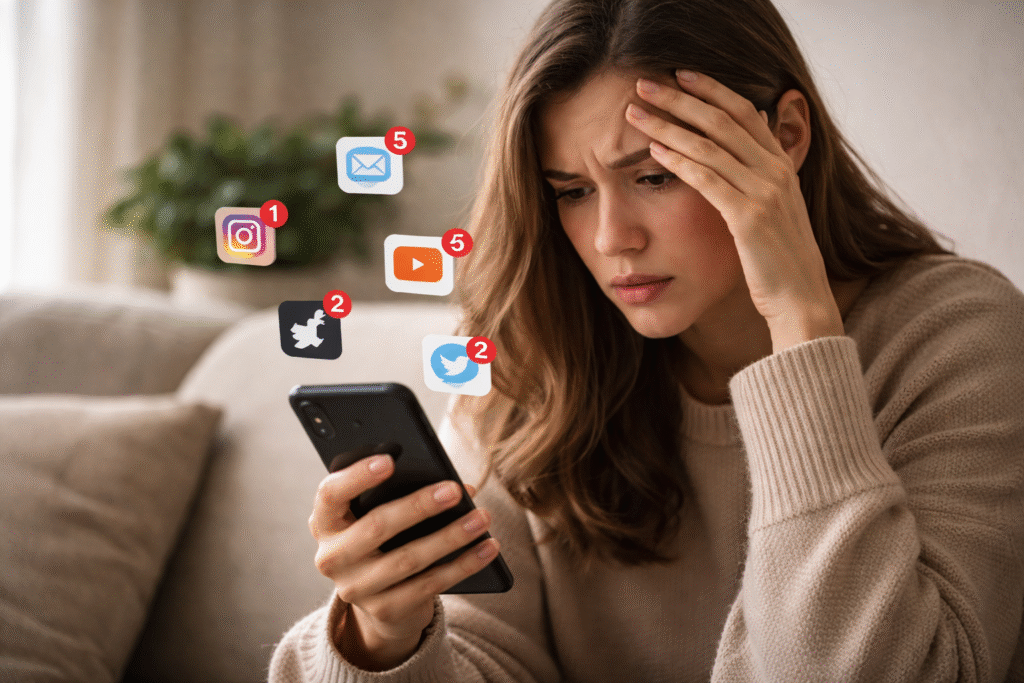




It starts subtly. You pick up your phone to check messages or scroll through social media, and before long, your mind feels foggy, your attention drifts, and even simple decisions seem heavier. This is scrolling fatigue—a mental strain that creeps in gradually, often unnoticed until it begins to affect focus, mood, and energy levels.
In today’s remote work culture, constant digital connectivity is normal. From checking Slack updates to scrolling news feeds during a commute, our brains are constantly toggling between streams of information.
Understanding what scrolling fatigue feels like and how it progresses helps prevent it from becoming chronic, enabling you to maintain alertness, clarity, and a healthier relationship with technology.
Table of Contents
What Scrolling Fatigue Feels Like
Scrolling fatigue is more than just tired eyes or sore thumbs. It’s a cognitive phenomenon where prolonged low-effort screen time fragments attention and drains mental energy. Unlike physical fatigue, this form of exhaustion can appear even after restful sleep, making it tricky to recognize.
Key characteristics include:
- Attention Fragmentation: Difficulty sustaining focus on a single task; frequent mind-wandering.
- Mental Fog: Slowed processing speed, reduced working memory, or forgetting small details.
- Emotional Blunting: Mild irritability, impatience, or lack of interest in engaging content.
- Physical Cues: Eye strain, subtle headaches, and tension in shoulders or neck from posture.
For example, you might be scrolling a news feed while waiting for a meeting to start, noticing that you repeatedly jump from post to post without retaining any information. Later, you feel mentally “drained,” even though you haven’t engaged in any strenuous cognitive tasks.

Early vs Advanced Symptoms
Scrolling fatigue develops progressively. Recognizing early warning signs allows for timely interventions, preventing more severe cognitive and emotional effects.
- Early Symptoms: Mild eye strain, occasional loss of focus, minor irritability, and slight restlessness.
- Moderate Symptoms: Frequent mind-wandering, consistent difficulty completing tasks, noticeable forgetfulness, and tension headaches.
- Advanced Symptoms: Persistent cognitive fog, emotional flattening, decreased motivation, disrupted sleep patterns, and even anxiety related to screen use.
Table: Categorizing Scrolling Fatigue Symptoms
| Severity | Symptoms | Examples |
|---|---|---|
| Mild | Eye strain, minor focus lapses, restlessness | Short scrolling sessions leading to distraction during work |
| Moderate | Frequent mind-wandering, headaches, forgetfulness | Checking social feeds for long periods and struggling to remember tasks |
| Severe | Cognitive fog, emotional flattening, sleep disruption | Extended screen time causing irritability, procrastination, and difficulty sleeping |
These distinctions help you identify how far scrolling fatigue has progressed and whether immediate adjustments are needed to restore mental clarity.
Real-World Symptom Examples
- Commuting: Reading news feeds or social media while on a bus or train may leave you mentally sluggish when you arrive at your destination.
- Work Breaks: Using breaks to scroll mindlessly can prevent your brain from recovering, making afternoon tasks feel more draining.
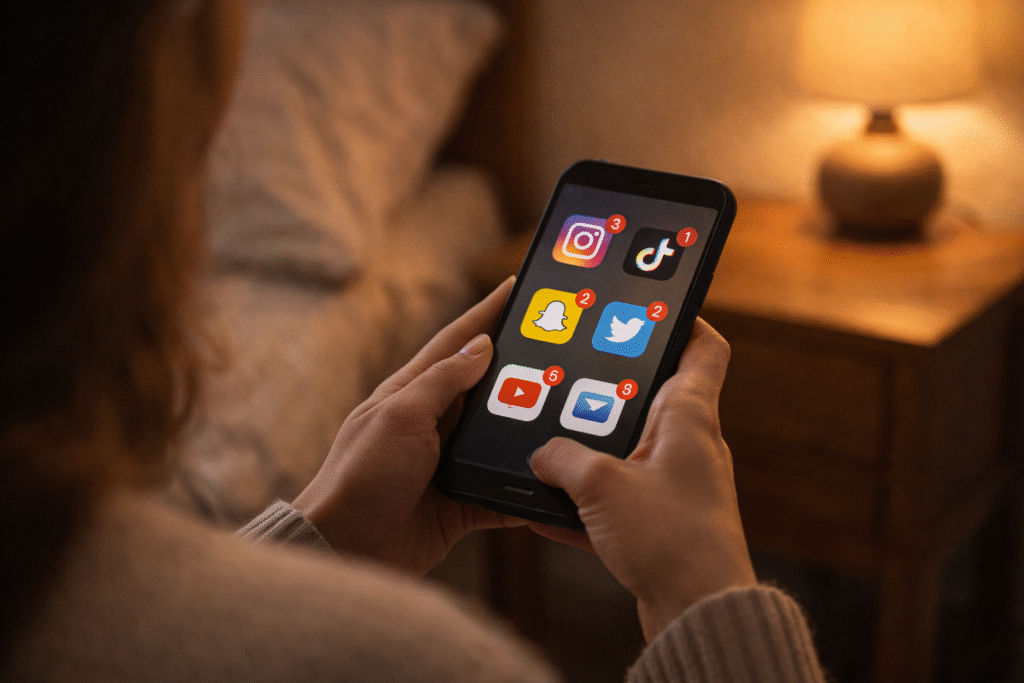
- Evening Relaxation: Couch scrolling after work can feel soothing at first but often leads to mental fog, eye strain, and subtle irritability.
The common thread in these scenarios is low-effort, high-frequency engagement. The brain is active enough to prevent boredom but not engaged enough to feel purposeful, which creates the sensation of fatigue.
Cognitive Mechanics Behind Scrolling Fatigue
Scrolling fatigue is driven by attention fragmentation and cumulative mental load:
- Attention Fragmentation: Constantly switching between posts, notifications, and apps prevents deep focus. Even when content seems light, the brain is performing rapid context shifts.
- Mental Exhaustion: Over time, these small cognitive shifts accumulate, reducing working memory capacity and slowing decision-making.
- Sensory Overload: Visual stimuli, colors, animations, and notifications continuously signal the brain, which can feel energizing briefly but ultimately drains cognitive resources.

Recognizing these mechanics is key to developing healthier digital habits. Early awareness helps prevent fatigue from escalating into more severe symptoms that can interfere with work, learning, or emotional well-being.
Why Symptoms Are Often Dismissed
Scrolling fatigue often goes unnoticed because the symptoms are subtle and gradual. Eye strain, mild irritability, or a foggy mind may feel like normal tiredness or just part of daily work. Many people assume that being “plugged in” is harmless, so they ignore early warning signs.
This dismissal is risky: persistent low-level cognitive strain can accumulate, making attention deficits, forgetfulness, and mental exhaustion more pronounced over time. By acknowledging early symptoms, you allow small adjustments before fatigue escalates into chronic digital overload.
When Scrolling Fatigue Becomes Chronic
Chronic scrolling fatigue arises when passive, frequent screen use is repeated daily without conscious breaks. Signs of prolonged fatigue include:
- Consistently poor focus and slowed thinking
- Emotional flattening or irritability linked to screen use
- Persistent headaches or eye strain
- Disrupted sleep or difficulty relaxing in the evening
At this stage, mental energy and attention reserves are depleted, and recovery may take longer. Recognizing patterns of prolonged cognitive strain helps prevent serious burnout and improves digital well-being.
Gentle Recovery Strategies
You don’t need extreme tech detoxes to recover from scrolling fatigue. Gentle, sustainable strategies include:
- Scheduled breaks: Step away from your phone or computer for 5–10 minutes every hour.
- Mindful scrolling: Limit sessions to intentional, purposeful browsing rather than open-ended feed surfing.
- Environment tweaks: Adjust lighting, reduce notifications, and create a calm, focused workspace.
- Movement and hydration: Short stretches, walking, and staying hydrated help reset both body and mind.
- Digital boundaries: Set specific times for social media or news, especially during high-stress periods.
Over time, these small adjustments retrain your attention and reduce cumulative mental strain without cutting out digital tools entirely.
Conclusion
Scrolling fatigue is a real, cumulative strain on attention and mental energy. Symptoms often appear subtle and are easy to dismiss, but recognizing early warning signs is critical for maintaining focus, emotional balance, and overall well-being.
By integrating mindful breaks, intentional scrolling, and environmental adjustments, you can reclaim mental clarity and reduce digital exhaustion, allowing technology to serve you rather than drain you.
FAQ
1. What exactly is scrolling fatigue?
Scrolling fatigue is a form of cognitive strain caused by prolonged, passive engagement with screens. It leads to attention fragmentation, mental exhaustion, eye strain, and sometimes emotional blunting. Unlike physical tiredness, it stems from over-stimulated but shallow mental activity rather than physical exertion.
2. How can I tell if I have early scrolling fatigue symptoms?
Early symptoms include mild eye strain, brief lapses in focus, minor irritability, or feeling mentally “foggy” after short scrolling sessions. Recognizing these early signs allows you to adjust screen habits before fatigue escalates.
3. Can scrolling fatigue affect sleep?
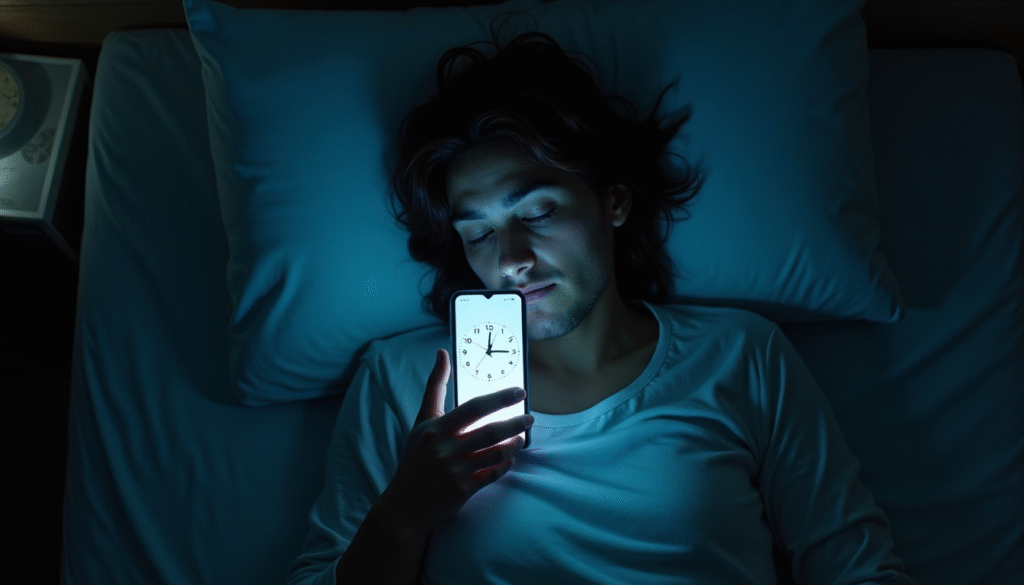
Yes. Mental exhaustion from passive scrolling can make it harder to relax and fall asleep, even if you’re not physically tired. Nighttime scrolling also exposes your eyes to light, which may interfere with circadian cues.
4. Is scrolling fatigue only caused by social media?
No. Any repetitive, low-effort digital activity—news feeds, email, or short-form video—can contribute to fatigue. The key factor is passive attention and rapid content switching, not the platform itself.
5. How long does it take to recover from scrolling fatigue?
Recovery varies based on severity. Mild fatigue can improve within a few days of mindful breaks and intentional scrolling. Chronic fatigue may take longer and benefits from consistent digital boundaries, proper rest, and stress management.
6. Can mindful scrolling really help?
Yes. Mindful scrolling encourages intentional use, reduces passive engagement, and helps preserve cognitive resources. Limiting sessions, focusing on meaningful content, and taking regular breaks all contribute to decreased mental strain.
7. Are there physical signs of scrolling fatigue?
Yes. Common physical signs include eye strain, tension in the shoulders or neck, subtle headaches, and postural discomfort from prolonged phone or computer use. Addressing these early prevents escalation and supports overall well-being.
Helpful Resources
- National Institute of Mental Health – Technology and Attention
https://www.nimh.nih.gov/health/topics/attention - Harvard Health Publishing – Constant Stimulation and Mental Fatigue
https://www.health.harvard.edu/mind-and-mood/are-you-overstimulated - Greater Good Science Center – Mindfulness and Technology
https://greatergood.berkeley.edu/topic/mindfulness/definition - Stanford University – The Cost of Digital Distraction
https://ed.stanford.edu/news/cost-digital-distraction