


close

Recommended Books

Sometimes, the best way to unplug is through a good book. In this section, we explore the most inspiring reads on mindfulness, productivity, digital minimalism, and intentional living. From Cal Newport’s Digital Minimalism to James Clear’s Atomic Habits, discover books that can reshape how you think, work, and use technology.

Recommended Books

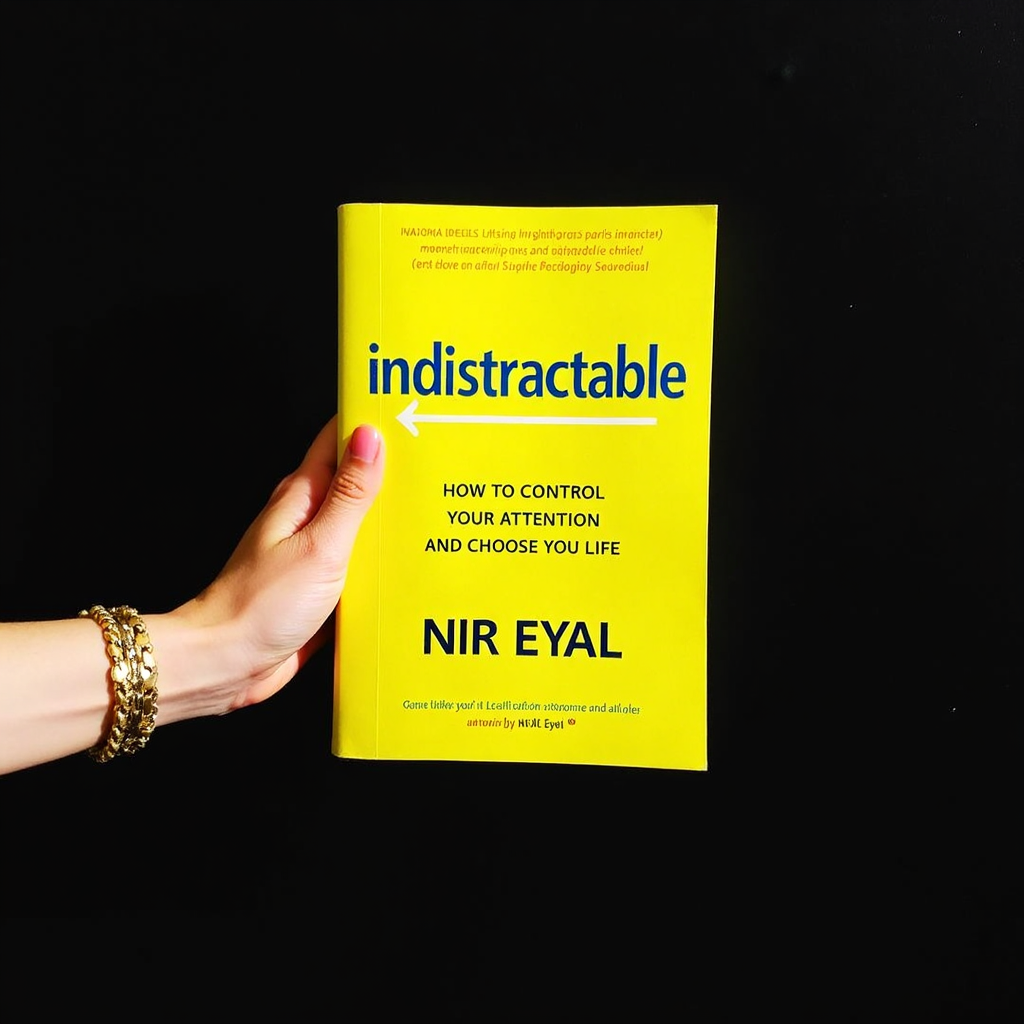
Finding Focus in a Noisy World: Key Takeaways from “Indistractable” by Nir Eyal

Finding Focus in a Noisy World feels like the ultimate modern challenge. For readers passionate about digital minimalism, the goal is clear: to build a life where technology serves us, not the other way around.

Yet, even with a carefully curated digital environment, our attention often scatters. Why does genuine concentration remain so elusive?

Nir Eyal’s book, Indistractable: How to Control Your Attention and Choose Your Life, offers a powerful answer. It acts as the essential practical companion to the philosophy of digital minimalism. If minimalism is about curating a thoughtful digital environment, Indistractable provides the psychological tools to thrive within it. It’s the “how-to” manual that brings the “why” of mindful tech to life.

For anyone looking to deepen their control over attention, the book’s lessons are transformative. Here are the key takeaways that can reshape any relationship with technology and work.

The Big “Aha!” Moment: The Real Enemy Isn’t Your Phone

This idea is the true game-changer from the book. A compelling case is made that the blame for distraction is often misplaced. It’s tempting to point fingers at social media, email, or streaming services as the villains.

But the real root of distraction is internal, not external. That phone isn’t a distraction itself; it becomes a tool used to escape from something else. That “something else” is usually an uncomfortable internal feeling—boredom, stress, loneliness, uncertainty, or fatigue. Every reach for a distraction is actually an attempt to flee a momentary sense of discomfort.

Consider a typical moment. Someone is working on a challenging task and feels a flicker of anxiety. The hand instinctively reaches for the phone. The phone didn’t cause the anxiety; it simply became the easiest, most habitual escape route. This reframe changes everything. It means the battle for focus is won not by sheer willpower against apps, but by learning to understand and sit with our own emotions.

The Four-Part Roadmap to Becoming Indistractable

The journey to becoming indistractable is broken down into a clear, four-part model. It logically starts on the inside and works its way out to the environment.
Finding Focus in a Noisy World

Getting Curious About Internal Triggers

Since distraction starts from within, the work must begin there too. This step is deeply rooted in mindfulness—cultivating curiosity about that sudden urge to escape.

The next time that pull to check a device appears, the advice is to simply pause for ten seconds. Ask, “What is the feeling here?”

Just name it. Is it boredom? Is it overwhelm because the task feels large?

The key is to observe without judgment. Eyal calls this “surfing the urge,” riding the wave of discomfort until it naturally passes. By examining the feeling instead of reflexively running from it, its power diminishes. It turns out a little boredom is quite manageable. It’s a mental muscle that can be strengthened with practice.

Planning Time Like It Matters (The Power of Timeboxing!)

This is where intention meets concrete action. Being indistractable isn’t about white-knuckling resistance all day; it’s about proactively deciding what deserves your time, which makes distractions easier to spot.

The essential tool for this is timeboxing. This doesn’t mean creating a rigid, minute-by-minute prison. It means making a calendar appointment for everything of importance—not just work meetings, but also blocks for deep work, time for processing email, exercise, family dinner, and even leisure like reading. If a task or activity has value, it gets a slot in the calendar.

This approach is revolutionary. It turns a calendar into a declaration of personal values. As Eyal writes, “If you don’t plan your day, someone else will.” And it’s true. When time is pre-committed to chosen activities, it becomes much harder for a random notification or an impromptu request to hijack attention. One can genuinely say, “I have something scheduled then,” and it’s completely accurate.

Taming the External World (A Digital Minimalist’s Dream)

Once there’s better management of the internal world and a plan for time, dealing with external triggers becomes a defensive strategy from a position of strength. This part sings in perfect harmony with digital minimalism.

For every app notification, email alert, or buzz, a new, powerful question can be asked: “Is this serving me, or am I serving it?” Does this alert align with what was planned for this moment? If not, it’s a distraction, and it can be hacked back.

This is the stage to get ruthless: turning off all non-essential notifications, using website blockers during focus sessions, and batching communication. It’s not about being unreachable; it’s about being reachable on your own terms. This is where a minimalist digital setup gets its protective armor.

Making Pacts to Lock In Future Behavior

Everyone knows that their future self can sometimes be a saboteur. “I’ll just watch one video…” turns into an hour. It’s a common human experience.

Pacts are clever pre-commitments made to help that future self stay on track. An effort pact makes distraction physically harder, like using an app blocker with a strict timer. A price pact puts money on the line, committing to donate to an unliked cause if a goal isn’t met.

But the most powerful is the identity pact. This is where one stops trying to be focused and starts being a focused person. It’s saying, “I’m not someone who scrolls during work blocks,” or, “I’m the kind of person who protects family time.” This shift in self-story is incredibly potent, especially when combined with a minimalist identity of being intentional with technology.

How This Fits With a Mindful Tech Life

Indistractable feels like the missing piece to the digital minimalism puzzle. Minimalism is the thoughtful, declarative philosophy—the “why.” It helps in choosing which tools deserve a place in life. Indistractable is the gritty, practical “how.” It provides the psychological tools to defend that carefully curated space from internal impulses and external demands.

One defines the quiet, intentional home. The other provides the locks on the doors and the skills to handle the urge to wander out randomly.

Wrapping It Up: It’s About Integrity

Ultimately, Indistractable is about more than productivity. It’s about personal integrity. It’s about closing the gap between what is said to be important and where attention is actually spent. Closing that gap is the core work of living a mindful life.

The goal isn’t perfection. It’s progress. It’s about catching distractions more quickly, surfing the urge a little longer, and gently guiding attention back to what was chosen. By mastering these steps, technology isn’t just used better—life is lived more intentionally, minute by planned minute.

FAQ: Your Questions, Answered

Q: Wait, so if distraction is my fault, does that let tech companies off the hook for designing addictive apps?

That’s an excellent question. The book’s point isn’t to absolve tech companies of ethical responsibility. It’s a pragmatic one: while advocating for better design, the only thing one can control with 100% certainty is their own response. It’s about claiming agency over personal attention while also supporting more ethical tech.

Q: Timeboxing seems rigid. My job is too unpredictable for that.

This is a common concern. The trick isn’t to create a perfect, unchangeable schedule. It’s to create a plan for an ideal day. Even in a chaotic job, one can timebox “buffer zones” or “reactive periods” specifically for handling the unexpected. The simple act of planning, even when it changes, fosters intentionality. It turns a person from a pinball bouncing between emergencies into a captain adjusting the course.

Q: What’s the absolute first step to take from this book?

Start small. Don’t try to overhaul everything at once. Just for a few days, keep a simple log. When that pull to get distracted appears, jot down: 1) The time, 2) What the intended task was, and 3) The feeling that arose (bored? stuck? tired?). This tiny act of awareness is the foundation for everything else. It’s impossible to manage what isn’t first seen.

Q: How does one deal with people who constantly interrupt?

This is where communication meets the calendar. A timebox can be used as a tool to set respectful boundaries. A team can be told, “I’m in deep work mode until 11, but I’ll be fully available for questions after.” At home, a rule could be, “Phones go in the basket from 6-8 PM for family time.” This isn’t about being unavailable; it’s about being transparent regarding availability.

Q: Doesn’t all this planning suck the joy and spontaneity out of life?

This is a natural worry, but the effect is often the opposite. Without planning, leisure and spontaneity are usually the first things consumed by busyness. By timeboxing work and chores, time for fun, connection, and spontaneous moments is actually guaranteed and protected. When 7 PM is officially “free time” on the calendar, one can relax into it completely, guilt-free. It’s freedom through structure.


read more
Recommended Books

Setting Tech Boundaries: Lessons from The 4-Hour Work Week

Tech Boundaries

How do I set tech boundaries at work?

In our modern work world, it often feels like technology runs us, rather than the other way around. Notifications are constant, emails pile up, and social media scrolls endlessly. Even a short break can turn into 20 minutes of mindless scrolling. For remote workers, this is even more challenging because the lines between work and home blur. Tech overload isn’t just a minor inconvenience—it affects focus, creativity, and overall well-being.

This is where Tim Ferriss’ The 4-Hour Work Week comes in. While the book is famous for its promise of working less and living more, it also offers practical lessons for managing technology thoughtfully. Remote workers, in particular, can benefit from Ferriss’ insights on setting boundaries, automating tasks, and creating a healthy relationship with tech.

In this article, we’ll explore how remote workers can apply these lessons to stay productive, mindful, and in control of their digital lives.

Understanding Tech Overload

Being connected 24/7 comes with hidden costs. Remote work often requires constant access to email, messaging apps, and project management tools, but the stress of being “always available” can take a toll on mental health and productivity. Endless notifications and social media updates fragment attention, making it hard to focus on deep, meaningful work.

Ferriss points out that busyness isn’t the same as productivity. You might be active on multiple platforms and respond to dozens of emails, but are you actually getting results? Constant connectivity can lead to burnout, lower creativity, and even anxiety.

Digital minimalism, a philosophy shared by Cal Newport, aligns well with Ferriss’ approach. It’s about using technology intentionally—keeping what adds value and eliminating what distracts. Awareness is the first step. Remote workers should start by tracking how they spend their screen time, noting apps and notifications that add little value.

Once you see where your attention goes, you can begin to take control, setting boundaries that protect your focus and mental well-being.

The 80/20 Principle and Smart Tech Use

One of Ferriss’ core ideas is the 80/20 principle, or Pareto principle, which suggests that 80% of results come from 20% of effort. Applied to work, this means focusing on high-impact tasks and minimizing time spent on low-value activities.

For remote workers, technology is often a major source of wasted effort. Endless Slack messages, constant emails, and notifications from various apps can create the illusion of productivity. Ferriss encourages identifying the tasks that truly drive results and cutting out the rest.

Here are some actionable ways to apply the 80/20 principle to tech use:

  • Filter emails ruthlessly: Set rules so only important messages reach your inbox. Batch the rest to handle at specific times.
  • Prioritize apps: Keep only the tools that help you get meaningful work done. Mute or delete the rest.
  • Schedule focus time: Block uninterrupted periods for high-value work and disable notifications during these sessions.

By concentrating on what matters, remote workers can avoid endless distractions and make technology serve their goals, rather than distract from them.

Defining Tech Boundaries Around Work

Ferriss emphasizes the importance of boundaries, especially for remote workers where work and personal life often overlap. Without limits, technology can take over your entire day.

One practical lesson is batching communication. Instead of responding to emails and messages the moment they arrive, set specific times to check and respond. This simple habit drastically reduces interruptions and mental clutter.

Other strategies include:

  • Set work hours: Even if your schedule is flexible, define when you’re “on” and “off.” Let colleagues know your availability.
  • Adopt a low-information diet: Avoid news, feeds, or updates that aren’t necessary for your work. Focus only on what contributes to your goals.
  • Use tech with intention: Open apps and tools only for specific purposes, not out of habit or boredom.

These boundaries create mental space, reduce stress, and help remote workers stay focused on what truly matters. Over time, this approach improves both productivity and well-being.

Automating and Outsourcing

Another key lesson from Ferriss is the value of automation and delegation. Repetitive tasks can consume hours each week. By automating or outsourcing these, remote workers can reclaim time and reduce screen fatigue.

Practical strategies include:

  • Email automation: Use filters, auto-responders, and templates to manage routine messages.
  • Task management tools: Apps like Trello, Asana, or Notion can automate reminders and track progress.
  • Outsource simple tasks: Virtual assistants or freelancers can handle research, data entry, or scheduling.

When technology handles repetitive work, you reduce mental clutter and unnecessary screen time. This opens space for creative thinking, problem-solving, and more meaningful work.

The Mini-Retirement Concept and Offline Time

Ferriss introduces the concept of mini-retirements—taking regular breaks from work throughout life instead of waiting until retirement. This idea reinforces the value of offline time.

For remote workers, stepping away from screens is essential to recharge energy and creativity. Mini-retirements don’t have to be long trips—they can be weekends without screens, nature walks, or “no-screen” hours each day.

Some practical approaches include:

  • Schedule weekly periods to unplug completely. Focus on hobbies, family, or personal projects.
  • Treat these breaks as non-negotiable and communicate them clearly to colleagues.
  • Use offline time to reflect on tech habits and make adjustments if necessary.

Even small, intentional breaks can reduce stress, improve focus, and help remote workers develop a healthier relationship with technology.

Mindful Tech Habits for Remote Workers

Remote work is flexible but can blur the line between productivity and constant connectivity. Ferriss’ lessons offer ways to stay efficient without feeling overwhelmed.

Some mindful tech habits include:

  • Create a dedicated workspace: Keep distractions out and signal to your brain that this is your focus area.
  • Schedule communication windows: Limit meetings and messages to specific times each day.
  • Take real breaks: Step away from your devices to rest your mind.
  • Batch social media use: Check personal accounts only at set times to avoid constant interruptions.

By combining digital minimalism with thoughtful routines, remote workers can maintain productivity while avoiding the burnout that often comes from being always connected.

Conclusion

The 4-Hour Work Week is more than a book about working less—it’s a guide for remote workers on living intentionally in a tech-heavy world. From understanding tech overload to applying the 80/20 principle, setting boundaries, automating tasks, taking mini-retirements, and practicing mindful tech habits, Ferriss offers practical lessons for managing technology thoughtfully.

Start small. Try batching your emails, scheduling a “no-screen” evening, or creating a dedicated workspace this week. Notice how it changes your focus and stress levels. Over time, these simple adjustments can lead to a calmer, more productive, and healthier work life.

Remember, technology should help you work and live better—not control your day. With Ferriss’ strategies, remote workers can enjoy the benefits of connectivity without sacrificing peace of mind.

FAQ

1. What does The 4-Hour Work Week teach about setting tech boundaries?

The book emphasizes that setting clear tech boundaries allows individuals to control their work environment, reduce distractions, and focus on high-value tasks. By limiting unnecessary digital interruptions, you can reclaim time for meaningful work and personal life.

2. How can tech boundaries improve productivity according to The 4-Hour Work Week?

Tim Ferriss argues that strict tech boundaries prevent constant multitasking and digital overload, which often reduce efficiency. By scheduling focused work periods and controlling email or social media usage, productivity naturally increases.

3. What are practical examples of tech boundaries for remote workers?

Examples include checking emails only twice a day, turning off non-essential notifications, establishing “no-screen” hours, and using tools that block distracting websites. These boundaries help remote workers stay focused and avoid burnout.

4. How do tech boundaries reduce stress and digital burnout?

By limiting constant exposure to emails, messages, and social media, tech boundaries give the brain time to rest and recharge. This reduces anxiety, prevents decision fatigue, and helps maintain a healthier work-life balance.

5. Can implementing tech boundaries help achieve work-life balance?

Yes. By defining when and how to engage with technology, you create clear separations between work and personal life. This allows more quality time for family, hobbies, and self-care while still maintaining professional responsibilities.

Further Reading

read more
Recommended Books

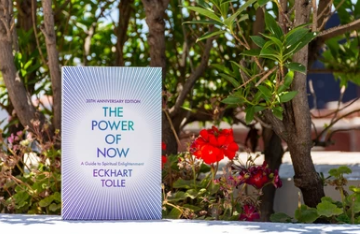
The Power of Now: What It Teaches Us About Tech Presence in the Digital Age

Modern life runs on screens. Phones wake us up, notifications follow us through the day, and work, learning, and relationships often happen through devices. Many people sense they are always connected yet rarely fully present. This tension sits at the heart of tech presence in the digital age—how to stay aware, focused, and grounded while using technology that constantly pulls attention away.

Eckhart Tolle’s ideas, especially the lessons drawn from The Power of Now, feel more relevant today than when the book was first published. While the book was not written about smartphones or social media, its core message speaks directly to digital life: presence is not about rejecting the world, but meeting it consciously. That includes how we use technology.

This article explores what tech presence really means, how digital habits affect awareness, and how timeless insights can help you build a healthier, more intentional relationship with technology.

Understanding Tech Presence in the Digital Age

Presence is not about rejecting technology, but choosing how we engage with it.

What “Being Present” Really Means in a Technology-Driven World

Being present does not mean abandoning your phone or going off the grid. It means giving full attention to what you are doing right now. In a technology-driven world, presence shows up as intentional use rather than reflexive scrolling.

When you are being present with technology, you choose when and why you engage. You read an email with focus instead of checking messages while half-watching a video. You finish a task before opening another app. Presence is not about perfection; it is about awareness.

Many people confuse presence with productivity. They are not the same. You can be busy all day and still feel mentally scattered. True presence creates clarity. It allows you to use tools for their purpose without letting them control your attention.

How Constant Connectivity Affects Awareness and Focus

Constant connectivity fragments attention. Notifications interrupt thought. Tabs multiply. Conversations compete with feeds. Over time, this trains the mind to expect interruption.

Research and lived experience both show that frequent switching reduces focus and increases mental fatigue. You may feel “on” all day yet struggle to recall what you actually did. This is where digital distraction and awareness become tightly linked. The less aware you are of your habits, the more easily technology pulls you out of the present moment.

Tech presence in the digital age starts with noticing this pattern, not judging it. Awareness always comes before change.

Key Lessons from The Power of Now Applied to Technology

Awareness vs. Distraction in Digital Spaces

One of the core Eckhart Tolle The Power of Now lessons is simple: awareness changes everything. The same applies to digital spaces.

tech presence in the digital age

Distraction often feels external, but it is sustained internally. A notification only becomes a problem when it automatically captures attention. Awareness creates a pause between the trigger and the response. That pause is where choice lives.

When you notice yourself reaching for your phone out of boredom or restlessness, you are already practicing conscious technology use. You may still pick it up, but the act is no longer automatic. Over time, that awareness weakens distraction’s grip.

Why Multitasking Weakens Present-Moment Focus

Multitasking is often praised, but it erodes presence. The mind cannot fully engage with multiple streams of information at once. It simply switches rapidly between them, losing depth each time.

From a mindfulness perspective, multitasking pulls you out of the now. Your attention stays divided, and nothing receives your full awareness. Technology makes multitasking easy, which is exactly why it requires boundaries.

Applying mindfulness in the digital age means doing one thing at a time whenever possible. One email. One document. One conversation. This is not about slowing down life; it is about meeting it fully.

Observing Tech Habits Without Judgment

Judgment creates resistance. Resistance keeps habits stuck. One of the most practical lessons from The Power of Now is to observe without labeling yourself as disciplined or undisciplined.

Instead of saying, “I waste too much time on my phone,” try noticing when and why you reach for it. Is it boredom? Stress? Avoidance? Curiosity?

This approach builds self-understanding. It turns technology from an enemy into a mirror. Through observation, you begin to see how technology affects presence and emotional state, moment by moment.

The Relationship Between Technology and Mindfulness

Digital Mindfulness as a Modern Survival Skill

Digital mindfulness is not a trend. It is a survival skill in an always-on world. It means staying aware of how technology shapes thoughts, emotions, and attention.

Mindfulness does not conflict with innovation. In fact, it makes technology more useful. When you are mindful, tools serve clear purposes. When you are not, they become noise.

Technology and mindfulness can coexist when awareness guides use. The issue is not the device, the app, or the platform. The issue is unconscious engagement.

How Technology Pulls Us Away from the Present Moment

Technology is designed to capture attention. Infinite scrolls, alerts, and algorithmic feeds encourage staying engaged longer than intended. This design is effective, not evil, but it does pull attention away from the present moment.

Without awareness, the mind jumps into comparison, worry, or anticipation. You are physically here but mentally elsewhere. Over time, this weakens your ability to stay grounded.

Mindful use of technology restores balance. It brings attention back to the body, breath, and immediate task, even while using digital tools.

Practical Ways to Practice Mindful Technology Use

Simple Tech Habits That Improve Presence

Mindful habits work best when they are small and realistic. Large digital detoxes often fail because they do not fit daily life.

One habit is intentional entry. Before opening an app or device, pause and ask why. This single question increases awareness instantly.

Another habit is single-tasking with technology. Close unnecessary tabs. Silence non-essential notifications. Let your attention settle on one task at a time.

Time boundaries also matter. Designating tech-free moments, even brief ones, trains the mind to rest in the present instead of seeking stimulation.

Using Technology Intentionally Instead of Automatically

Automatic use feels compulsive. Intentional use feels deliberate. The difference is awareness.

Conscious technology use does not mean strict rules. It means aligning technology with your values. If learning matters to you, you use tools differently than if constant entertainment does.

This approach supports staying present in a tech-driven world without guilt or extremes. Technology becomes something you use, not something that uses you.

Building a Healthier Relationship With Technology

Balancing Productivity and Presence

Productivity without presence leads to burnout. Presence without direction leads to stagnation. The goal is balance.

When you are present, productivity improves naturally. You make fewer mistakes. You finish tasks faster. You feel less drained. This balance comes from clarity, not pressure.

A healthy relationship with technology supports focus, creativity, and rest. It respects mental limits instead of pushing past them.

Staying Present in a Tech-Driven World Without Quitting Tech

Quitting technology is neither realistic nor necessary. The challenge is learning how to live with it consciously.

This means accepting that technology is part of modern life while refusing to let it dominate attention. Presence becomes an inner stance, not an external rule.

By applying mindfulness in the digital age, you stay grounded even while navigating complex digital environments. You are in the world, but not lost in it.

Final Thoughts on Conscious Technology Use

Why Presence Matters More Than Ever in the Digital Age

Presence is not a luxury. It is a necessity in a world competing for attention. Without it, life feels rushed, fragmented, and shallow.

The real message behind tech presence in the digital age is not about control, but about choice. When you are present, you choose how to engage, when to step back, and what truly deserves your attention.

Technology will keep evolving. Presence is what allows you to evolve with it, without losing yourself in the process.

Frequently Asked Questions

What does tech presence mean in simple terms?
Tech presence means being aware and intentional when using technology instead of acting on habit or distraction.

How does technology affect presence?
Technology can fragment attention through constant notifications and multitasking, making it harder to stay focused in the moment.

Is digital mindfulness the same as a digital detox?
No. Digital mindfulness focuses on awareness and intentional use, not complete avoidance of technology.

Can I be productive and present at the same time?
Yes. Presence often improves productivity by reducing errors, mental fatigue, and unnecessary task switching.

Do I need to limit screen time to practice mindful technology use?
Limits can help, but awareness matters more. Intentional use matters more than strict time rules.

How do I start practicing conscious technology use today?
Begin by noticing when and why you use your devices. Awareness is the first and most important step.

read more
Recommended Books

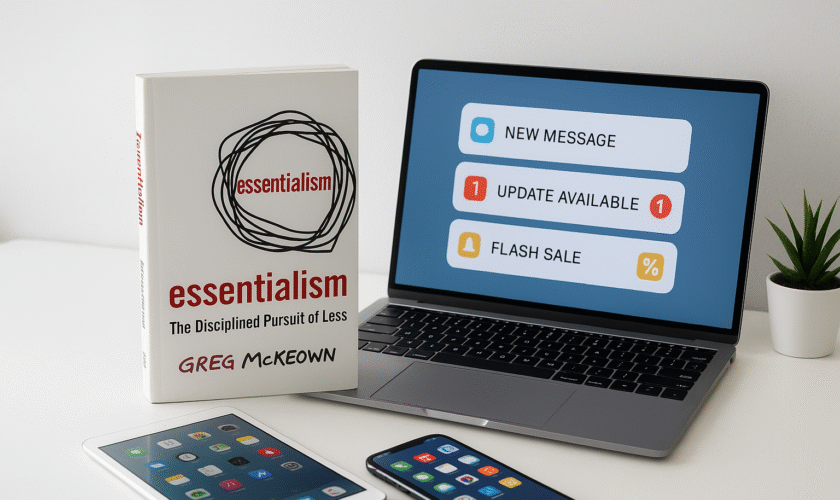
Essentialism by Greg McKeown: Master Focus and Productivity in a Digital World

Essentialism by Greg McKeown offers a transformative approach for navigating today’s digital age, where technology can both empower and overwhelm us. Smartphones buzz relentlessly, emails pile up, social media demands our attention, and apps compete for every second of our day. Amid this digital chaos, the pressing question becomes: how can we regain control over our time, energy, and focus?

Greg McKeown’s book, “Essentialism: The Disciplined Pursuit of Less”, provides a transformative answer. This book will change how you use tech forever, teaching you to focus on what truly matters and cut out the noise that hinders productivity.

In this review, we’ll explore the core concepts of Essentialism, its application to technology, and practical steps you can take to implement its lessons in your digital life. Whether you’re a tech enthusiast, a professional struggling with digital distractions, or someone seeking more focus in a busy world, this guide will show why Essentialism is a must-read.

What is Essentialism?

The Core Concept

At its heart, Essentialism is the art of discerning what is essential and eliminating what is not. McKeown defines it as “the disciplined pursuit of less but better.” Unlike multitasking or trying to do everything, Essentialism teaches that true success and satisfaction come from concentrating on the few things that truly matter. It’s not about doing more faster—it’s about doing less, but achieving far greater impact.

The philosophy of Essentialism extends beyond time management; it’s a mindset shift. It challenges the cultural pressure to say yes to every opportunity, attend every meeting, and respond to every notification. By applying Essentialist principles, individuals can regain control over their energy, decisions, and focus.

Why It Matters in a Tech-Heavy World

The digital world is filled with distractions. Social media notifications, endless email chains, instant messages, and new apps constantly compete for our attention. Technology, while designed to simplify life, often leads to information overload and stress. Many of us spend hours each day reacting to digital demands rather than focusing on meaningful work.

Essentialism provides a framework to combat this modern dilemma. It teaches that every notification, app, and online task should be evaluated based on its true importance. By prioritizing what matters, we can reduce mental clutter, enhance productivity, and regain a sense of control over our tech-driven lives.

How Essentialism Changes Your Approach to Technology

Prioritizing Digital Tasks

One of the most practical lessons in Essentialism is learning to prioritize. Not all digital tasks are created equal. Some emails, apps, or notifications may seem urgent, but they offer little real value. Essentialism encourages a critical assessment of every tech-related activity.

By prioritizing high-impact tasks, such as responding to key emails, completing essential projects, or engaging meaningfully on professional networks, you can make technology work for you instead of allowing it to dictate your day. This is a shift from being reactive to being proactive in your digital life.

Saying No to Non-Essential Digital Noise

The ability to say no is central to the Essentialist mindset. McKeown emphasizes that every yes to a non-essential task is a silent no to something truly important. In the tech world, this means unsubscribing from unnecessary newsletters, turning off push notifications, and avoiding apps that waste time.

By removing non-essential digital distractions, you free up mental space and time for activities that genuinely contribute to your goals. Saying no is not about being lazy; it’s about making intentional choices that maximize your impact.

Creating Focused Tech Routines

Essentialism also promotes structured routines to manage technology use. Instead of sporadically checking emails or scrolling social media, you can create designated tech times. For instance, responding to emails only at specific hours, batching social media interactions, or setting aside distraction-free periods for deep work.

Focused routines reduce cognitive load, minimize interruptions, and enhance productivity. Technology, when used intentionally, becomes a powerful tool rather than a source of stress.

Key Lessons from Essentialism by Greg McKeown for Tech Users

Essentialism by Greg McKeown

Less But Better

McKeown’s mantra, “less but better,” applies directly to technology. Instead of using every productivity app, subscribing to every platform, or attempting every new digital trend, focus on the tools that truly matter. Select apps, software, and devices that enhance your work, creativity, or personal growth.

For example, instead of juggling multiple project management tools, pick one that meets all your essential needs. By reducing tech clutter, you can spend more energy on what actually drives results.

Clarity is Power

Essentialism emphasizes clarity. When you are clear about your priorities, distractions lose their power. In a tech-heavy world, clarity means understanding which digital inputs align with your goals and which don’t.

Creating a clear tech strategy—knowing which apps, emails, or platforms deserve attention—helps reduce anxiety and decision fatigue. Clarity allows you to approach technology with purpose rather than habitually reacting to every ping.

Intentional Technology Use

Mindfulness is a recurring theme in Essentialism. Using technology intentionally means consciously deciding how, when, and why you engage with digital tools. It’s about focusing on quality interactions over quantity, whether that’s in emails, social media, or online research.

Intentional tech use encourages reflection. Before opening an app or responding to a notification, ask: “Does this align with my priorities?” This habit fosters discipline and ensures that technology serves your goals rather than undermines them.

Practical Tips to Apply Essentialism in Your Digital Life

Audit Your Digital Life

Start by conducting a digital audit. List all apps, subscriptions, emails, and online tools you regularly use. Identify which ones are essential and which are non-essential. Removing or minimizing non-essential tools immediately reduces clutter and stress.

This process can reveal surprising insights. You might discover apps you no longer need, emails that create unnecessary urgency, or online routines that consume excessive time without meaningful results.

Limit Notifications and Alerts

Notifications are one of the biggest sources of distraction. Essentialism advocates turning off non-critical alerts. Limit notifications to important emails, calendar reminders, or urgent communication channels.

Consider using “Do Not Disturb” modes during focused work sessions or creating separate devices for essential work versus leisure. By controlling notifications, you reclaim attention and mental energy.

Schedule Tech-Free Time

Designating tech-free periods is crucial for maintaining focus and mental clarity. Essentialism encourages setting boundaries for technology use, such as offline hours in the evening or distraction-free work blocks.

Tech-free time allows for reflection, deep thinking, and creative problem-solving. It strengthens your ability to focus when you are online and reduces the feeling of constant digital overwhelm.

Why Every Tech User Should Read Essentialism

In an era of digital saturation, Essentialism offers a roadmap to simplicity, focus, and intentional living. The book is not only about productivity but also about well-being, mental clarity, and purpose. For tech users, the lessons are particularly transformative.

By applying Essentialism principles, you can:

  • Increase productivity without increasing effort.
  • Reduce stress caused by constant digital distractions.
  • Make intentional choices about technology use.
  • Gain mental clarity and a sense of control over your digital environment.
  • Focus on activities that truly create value and satisfaction.

Essentialism transforms the way we interact with technology, turning it from a source of overwhelm into a tool for achieving meaningful goals.

Conclusion

Greg McKeown’s Essentialism is more than a productivity book; it is a guide to living intentionally in a world full of distractions. By teaching the disciplined pursuit of less but better, it empowers readers to focus on what truly matters and eliminate the non-essential.

For anyone feeling overwhelmed by technology, constantly checking emails, juggling apps, or succumbing to social media distractions, this book provides actionable strategies to regain control. By prioritizing, saying no, and using technology intentionally, you can reclaim your time, energy, and focus.

If you want to enhance your digital life, reduce distraction, and improve productivity, Essentialism by Greg McKeown is a must-read. This book will change how you use tech forever.

FAQs About Essentialism by Greg McKeown and Tech Use

Can Essentialism help reduce smartphone addiction?

Yes. By teaching mindful and intentional technology use, Essentialism encourages setting boundaries, reducing notifications, and prioritizing essential digital activities, which can significantly reduce smartphone addiction.

How do I start applying Essentialism today?

Begin with a digital audit. Identify essential tools and tasks, remove distractions, limit notifications, and create focused tech routines. Start small, and gradually integrate Essentialism principles into your daily life.

Is Essentialism only about work productivity?

No. While Essentialism is highly effective for work productivity, its principles apply to all aspects of life, including personal relationships, hobbies, and digital habits. It’s about focusing on what truly matters in any area of life.

Does Essentialism require quitting all technology?

Absolutely not. Essentialism is about intentional use, not avoidance. It’s about using technology selectively and purposefully to maximize impact while reducing distraction.

Can Essentialism improve focus in a tech-heavy workplace?

Yes. By prioritizing essential tasks, minimizing interruptions, and creating structured work routines, Essentialism can significantly improve focus and efficiency in a workplace dominated by technology.

read more
Recommended Books

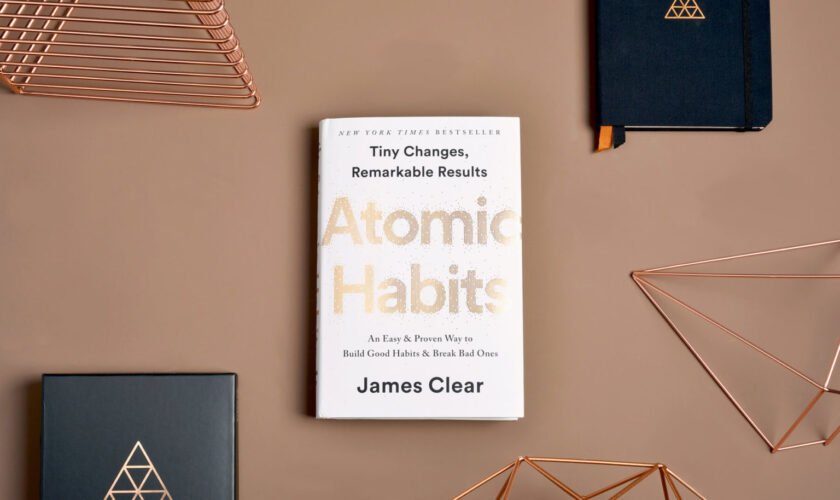
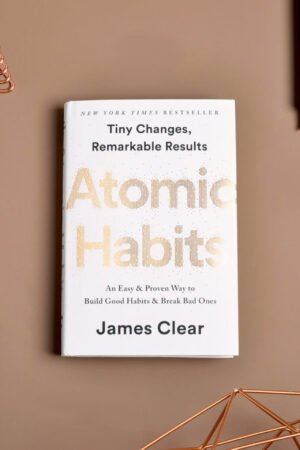
Atomic Habits for Remote Workers: Why This Book Is Essential in 2025

Working remotely comes with incredible freedom — but also new levels of distraction, mental fatigue, and the constant battle to stay productive without burning out. If you’ve ever felt stuck, overwhelmed, or inconsistent with your work-from-home routine, you’re not alone.

Millions of remote workers are quietly struggling with the same challenge: how do you stay disciplined when no one is watching?

This is exactly why “Atomic Habits” by James Clear might be the most important book remote workers can read in 2025.
Not because it teaches productivity hacks…
Not because it gives you motivational quotes…
But because it shows you how to build a system that makes good habits automatic — even on the days when you don’t feel motivated at all.

And let’s be honest: working from home has a lot of those days.

In this review, we’re going to explore why Atomic Habits is such a game-changer for remote workers, what sets it apart from other productivity books, the key lessons that directly apply to remote work life, and how you can start using its principles today to transform your daily routine.

Let’s dive in.

The Remote Work Reality in 2025 — and Why Habits Matter More Than Ever

Remote work has evolved massively since 2020.
By 2025, more than 41% of global companies have adopted hybrid or fully remote structures, and freelancers are growing faster than ever. But with all this flexibility comes a new wave of challenges:

  • Lack of structure
  • Difficulty separating work from personal life
  • Digital overload
  • Constant distractions
  • Motivation swings
  • Procrastination
  • Burnout

Here’s the truth: remote work doesn’t just require skills — it requires systems.
You need routines that support your energy, mindset, productivity, and focus.

That’s where Atomic Habits shines.
It doesn’t tell you to “be more disciplined.”
It teaches you how to build habits that make discipline unnecessary.

What Makes Atomic Habits for Remote Workers A Perfect Book?

1. It Focuses on Systems, Not Willpower

Remote workers often rely on motivation to get things done.
But motivation is unreliable.
Some days you wake up ready to conquer the world. Other days, even opening your laptop feels like climbing a mountain.

James Clear explains that you don’t rise to the level of your goals — you fall to the level of your systems.

For remote workers, this means:

  • You need a morning routine that starts your day automatically.
  • You need a workspace that triggers focus.
  • Your digital environment must support productivity, not distract from it.
  • You need habits that reduce friction — not ones that require constant effort.

Systems > motivation.
This is the core message of the book — and the lifeline remote workers need.

2. It Teaches You How to Break Bad Work-From-Home Habits

Let’s be honest… we’ve all picked up bad habits while working from home:

  • Checking social media every few minutes
  • Working from bed
  • Eating while working
  • Overworking because “the laptop is right there”
  • Never taking real breaks
  • Procrastinating until panic mode

Atomic Habits gives clear, actionable steps to break these patterns using the Four Laws of Behavior Change:

  1. Make it obvious
  2. Make it attractive
  3. Make it easy
  4. Make it satisfying

For example, if you want to stop checking your phone while working:
• Keep it in another room (make it invisible)
• Turn off notifications (reduce attractiveness)
• Use website blockers (increase friction)
• Track “distraction-free hours” (make success satisfying)

Remote work becomes easier when your environment works with you, not against you — something this book teaches brilliantly.

3. It Helps Remote Workers Build Consistency — the True Key to Success

Consistency is the biggest struggle in remote work.
You’re productive for two days, then you crash for the rest of the week.
You start a routine but fail to maintain it long enough for it to stick.

Atomic Habits introduces the idea of 1% improvement every day, showing that tiny changes compound into massive results over time. For remote workers, this means:

  • One productive hour daily beats one exhausting 10-hour sprint.
  • One small routine change can shift your entire day.
  • Tiny habits like “writing one sentence” make big goals achievable.

Instead of overhauling your life overnight, you stack small actions that create long-lasting momentum.

Key Lessons from “Atomic Habits” That Every Remote Worker Should Apply

1. Build Identity-Based Habits

Instead of saying:
“I want to be more productive,”
shift to:
“I am a productive remote worker.”

This small mindset shift changes everything.
You stop trying to “force” productivity and start acting like the person you want to become.

Identity shapes behavior — and identity-based habits are extremely powerful for remote workers who need self-direction.

2. Use Habit Stacking to Build a Work Routine

James Clear suggests linking a new habit to an existing one:

After I [current habit], I will [new habit].

For example:

  • After I make my morning tea, I will sit at my desk.
  • After I open my laptop, I will plan my top 3 tasks.
  • After I finish a work session, I will take a 5-minute break.

Habit stacking simplifies routines and builds automatic consistency — something essential for remote success.

3. Design Your Environment for Success

Your environment determines your habits more than motivation ever will.

For remote workers:

  • A cluttered desk leads to mental clutter.
  • Working from bed leads to laziness.
  • Noisy surroundings destroy focus.
  • An open kitchen leads to unnecessary snacking.

Atomic Habits teaches you to design your space intentionally:

• Keep your workspace clean
• Use lighting that boosts focus
• Place your laptop where work happens
• Remove distractions from view
• Keep your to-do list visible

A tiny change in your environment can transform your entire workday.

4. Make Good Habits Easy and Bad Habits Hard

This is the principle remote workers need most.

Make good habits frictionless:

  • Keep your work tools ready
  • Automate scheduling
  • Prepare your workspace the night before
  • Use templates for repetitive tasks

Make bad habits difficult:

  • Log out of social media
  • Keep your phone away
  • Turn off autoplay on YouTube
  • Block distracting websites

When the path of least resistance leads to productivity, remote work becomes simple and stress-free.

5. Use the Two-Minute Rule

If a habit takes less than two minutes, do it immediately.

This helps remote workers:

  • Start hard tasks
  • Beat procrastination
  • Build momentum

Instead of “I’ll work on my project,” say:
“I’ll open the document and write one sentence.”

Once you start, you rarely stop.

Why “Atomic Habits” Matters Specifically for Remote Workers in 2025

1. The Digital World Is More Distracting Than Ever

In 2025, the average remote worker receives:

  • 120+ notifications daily
  • 65% more digital messages than before
  • Double the screen time compared to 2019

Habits are now your shield against distraction.

2. Burnout Rates Are Rising

A 2024 report showed that 59% of remote workers experienced burnout, mainly due to lack of boundaries and structure.

Atomic Habits provides practical ways to build sustainable routines that protect your mental health.

3. Remote Work Success Now Depends on Self-Management Skills

Companies hiring remote talent want people who can:

  • Manage their own time
  • Work without supervision
  • Stay consistent
  • Maintain productivity

The book teaches these traits better than any online course.

4. Flexible Work Requires Strong Personal Systems

With flexible schedules, it’s easy to drift into chaos.
Atomic Habits helps remote workers create daily systems that bring stability and clarity.

Who Should Read Atomic Habits in 2025?

This book is perfect for:

  • New remote workers
  • Freelancers
  • Digital nomads
  • Remote managers
  • Students taking online classes
  • Anyone struggling with focus or procrastination
  • Anyone feeling stuck or overwhelmed with remote life

If you’re trying to reinvent your workflow or get your life in order, this book is essential.

Final Verdict — Is “Atomic Habits” Worth Reading for Remote Workers?

Absolutely — 100% yes.

In fact, if you’re a remote worker, Atomic Habits might be the most important personal development book you can read this year.

It doesn’t overwhelm you with unrealistic expectations.
Instead, it helps you redesign your life using simple, small, science-backed habits that actually stick.

Here’s why it’s worth your time:

  • You’ll become more consistent
  • You’ll eliminate procrastination
  • You’ll stop relying on motivation
  • You’ll create powerful daily routines
  • You’ll have more energy and less stress
  • You’ll get more done in less time
  • You’ll feel in control of your life again

If remote work is your long-term path, Atomic Habits is the blueprint for thriving in 2025 and beyond.

FAQs

1. Why is “Atomic Habits” especially relevant to remote workers?

Atomic Habits is packed with simple, research-backed strategies that help remote workers stay consistent, maintain focus, and build structure — all of which are essential when working without the in-office routine. The book provides actionable steps that directly apply to improving home-based work habits.

2. Can “Atomic Habits” help reduce burnout for remote workers?

Yes. One of the book’s core principles is focusing on small, manageable improvements. This approach prevents overwhelm and reduces mental fatigue, helping remote workers sustain productivity without burning out.

3. Does the book offer strategies for better time management?

Absolutely. James Clear introduces frameworks like habit stacking, the two-minute rule, identity-based habits, and environment design — all of which make time management easier and more natural.

4. Is “Atomic Habits” useful for new remote workers?

Very much so. New remote workers often struggle with routine, motivation, and discipline. The book provides the foundational systems needed to build a strong work-from-home structure from day one.

5. How long does it take to see results using strategies from “Atomic Habits”?

Many readers report noticeable improvements within a few weeks, especially when applying small daily changes. Because the system focuses on tiny, consistent steps, results build quickly and compound over time.

6. Do remote teams benefit from “Atomic Habits” too?

Yes — teams can use these principles to create shared systems, define better workflows, and reduce friction in communication. It helps create predictable routines that make collaboration smoother.

read more
Recommended Books

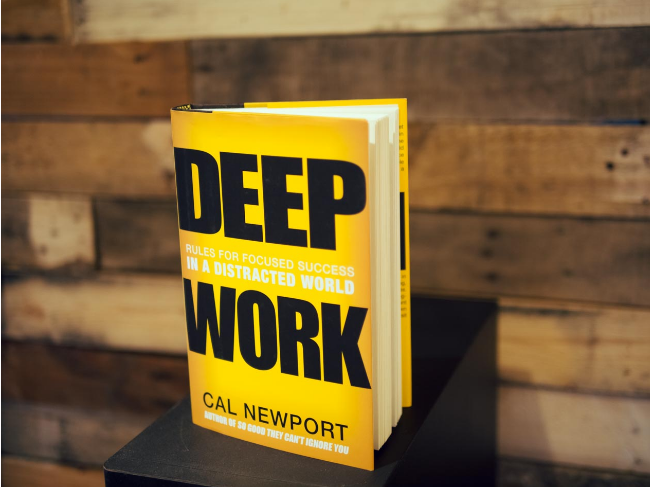
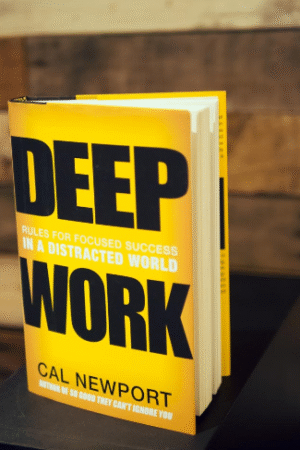
What Deep Work by Cal Newport Can Teach Remote Workers About Mindful Focus

In a world where remote work has become the new normal—and digital distractions are louder than ever—Deep Work by Cal Newport stands out as one of the most important productivity books of the modern era. Newport argues that the ability to focus without distraction is becoming increasingly rare, even as it becomes more valuable in the digital economy. For remote workers juggling Slack messages, email pings, Zoom calls, and social media notifications, the ideas in Deep Work offer a roadmap for reclaiming attention, improving work quality, and reducing burnout.

Through a mix of science, real-world examples, and practical strategies, Deep Work by Cal Newport shows readers why deep, focused work is a superpower—and how cultivating it can transform your professional life.

This review explores the book’s key lessons and explains how remote workers can apply its principles to build mindful focus, increase productivity, and create healthier work routines.

Overview of Deep Work by Cal Newport

Cal Newport, a computer science professor at Georgetown University, introduces the concept of Deep Work as the ability to engage in cognitively demanding tasks in a distraction-free environment. He contrasts this with “shallow work,” which includes tasks such as answering emails, attending unproductive meetings, or checking social media—activities that are low-value but often dominate a professional’s day.

“Clarity about what matters provides clarity about what does not.”
Cal Newport, Deep Work

The book is divided into two parts: the first explains why deep work is valuable and rare in modern knowledge economies; the second offers actionable strategies to cultivate deep work habits. Newport argues that mastering deep work is akin to acquiring a superpower in a world increasingly addicted to shallow work.

For remote workers, this message resonates strongly. Unlike traditional office environments, remote work blurs boundaries between personal and professional life. While the flexibility can be liberating, it also creates fertile ground for distractions—from household chores to social media and messaging apps.

Newport’s principles serve as a guide to structure remote work in ways that maximize attention, creativity, and output.

Key Concepts for Remote Workers

1. Deep Work vs. Shallow Work

Newport’s core distinction is between deep work—focused, high-value, cognitively demanding tasks—and shallow work, which is often reactive, low-value, and distraction-heavy. Remote workers frequently fall into shallow work traps, answering emails immediately or checking Slack constantly, which interrupts the focus required for meaningful progress.

By categorizing tasks and prioritizing deep work, remote professionals can reclaim hours of lost productivity. Newport cites examples of high-performing individuals, from Carl Jung to Bill Gates, who structured their lives around uninterrupted periods of focus, producing transformative work. The message is clear: focus is more valuable than busyness.

2. The Value of Mindful Focus

A central theme of Deep Work is cultivating mindful focus—the ability to concentrate fully on one task without distraction. Newport draws on cognitive science research showing that humans cannot multitask effectively; frequent context-switching reduces cognitive performance and increases mental fatigue.

For remote workers, this principle is especially critical. Unlike office environments with predictable routines, home-based workspaces require deliberate structuring to support focus. Newport emphasizes that deep work is a skill that can be developed over time. By intentionally setting aside distraction-free periods, one can train the brain to achieve higher levels of concentration.

3. Time Blocking and Rituals

Newport advocates the use of time blocking: scheduling specific blocks for deep work while reserving other periods for shallow tasks. He also suggests creating rituals and routines around deep work—defining where, when, and how you will work—to reduce decision fatigue and make focused work automatic.

Remote workers can implement this by allocating morning hours for critical projects and afternoons for emails, meetings, or administrative tasks. For example, a remote software developer might block 9:00 AM to 12:00 PM for coding without interruptions, ensuring that the most cognitively demanding work happens during peak energy periods.

4. Embracing Boredom and Reducing Distractions

One of Newport’s more counterintuitive suggestions is to embrace boredom. He argues that constant stimulation—endless notifications, social media, and entertainment—undermines the brain’s ability to focus. Allowing periods of mental rest and resisting the urge to fill every idle moment with digital input strengthens concentration and creativity.

Remote workers can apply this by scheduling short breaks without screens or practicing “internet fasting” for blocks of time. Tools like Freedom, Forest, or Focus@Will can aid in reducing digital distractions, but Newport emphasizes that personal discipline is ultimately the most important factor.

5. The Four Rules of Deep Work

Newport provides four practical rules for cultivating deep work, which are highly relevant for remote professionals:

  1. Work Deeply: Create routines and rituals to sustain focus. For remote workers, this means dedicating specific periods to distraction-free work and using techniques like the Pomodoro method to maintain energy.
  2. Embrace Boredom: Train the mind to resist constant stimulation. Scheduled breaks and unplugged periods help reinforce attention control.
  3. Quit Social Media: Evaluate digital tools critically. Remote workers should question whether apps genuinely contribute to productivity or merely consume time.
  4. Drain the Shallows: Minimize low-value tasks. Newport encourages batching shallow work, such as emails, and delegating whenever possible, to prioritize high-impact activities.

By applying these rules, remote workers can reclaim focus, enhance cognitive performance, and produce more meaningful results.

Why This Book is a Must-Read for Remote Workers

Deep Work offers remote professionals a blueprint for navigating the unique challenges of working from home. The book addresses several critical issues:

deep work by cal newport
A remote worker sitting at a clean desk wearing headphones, fully focused on a screen.
  • Distraction Management: Remote workers are surrounded by potential interruptions. Newport’s strategies provide concrete methods for minimizing these distractions.
  • Productivity Optimization: Focusing on high-value tasks rather than reactive shallow work enables better output and faster skill acquisition.
  • Work-Life Balance: By concentrating deeply on work during designated periods, remote professionals can finish tasks more efficiently, freeing personal time and reducing burnout.
  • Professional Growth: Mastering deep work helps remote workers develop rare and valuable skills, setting them apart in competitive knowledge-based industries.

In essence, the book is not just about working harder—it’s about working smarter, more intentionally, and with purpose.

Critique and Limitations

While Deep Work by Cal Newport is highly praised, there are some considerations:

  • Newport’s approach may feel rigid to some remote workers. Time blocking and strict routines require discipline that may not suit everyone’s lifestyle.
  • The book focuses primarily on knowledge workers and may not directly apply to roles requiring constant collaboration or real-time responsiveness.
  • Implementing all strategies simultaneously can feel overwhelming; a gradual adoption approach is recommended.

Despite these limitations, the book’s core principles are adaptable. Remote workers can selectively implement the rules that align with their specific context and gradually build a sustainable deep work practice.

Conclusion

Cal Newport’s Deep Work is an essential read for remote workers seeking to reclaim control over their attention and improve productivity. The book highlights a critical truth for the modern knowledge worker: mindful focus is more valuable than constant busyness.

By distinguishing deep work from shallow work, embracing boredom, scheduling distraction-free periods, and minimizing low-value digital activities, remote professionals can transform their work habits. The result is higher-quality output, faster task completion, reduced stress, and greater professional satisfaction.

For anyone navigating the challenges of remote work in a digital world, Deep Work offers actionable insights and a philosophy that can fundamentally reshape the way we approach work. In short, Newport doesn’t just teach us to work harder—he teaches us to work deeper.

Frequently Asked Questions

1. What is the main message of Deep Work by Cal Newport?

The book emphasizes the importance of distraction-free, high-focus work. Newport argues that deep work is rare yet incredibly valuable in today’s digital economy and that mastering it leads to higher productivity and better long-term career success.

2. How can remote workers apply the principles of Deep Work?

Remote workers can use time blocking, eliminate digital distractions, set work rituals, and designate deep work hours to stay focused. Tools like Freedom and Forest also help maintain concentration.

3. Is Deep Work realistic for people with busy schedules?

Yes. Newport argues that even short, structured blocks of deep work—60 to 90 minutes—can significantly boost performance. Consistency is more important than long sessions.

4. What are examples of shallow work?

Shallow work includes answering non-urgent emails, frequent Slack messaging, attending unnecessary meetings, and multitasking across administrative tasks.

5. Does Deep Work help reduce burnout?

Absolutely. Deep work reduces cognitive overload by minimizing constant task switching. It leads to a clearer mind, faster completion of tasks, and more free time—helping prevent burnout.

read more
Recommended Books

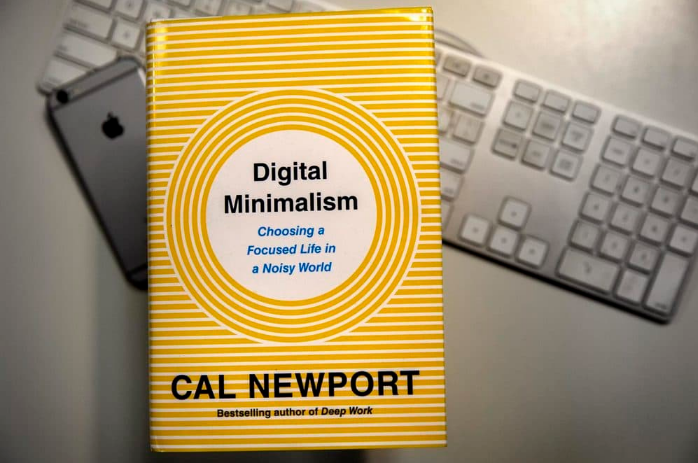
Why Haven’t You Read Digital Minimalism by Cal Newport Yet? Here’s What You’re Missing

Digital Minimalism by Cal Newport — Why Haven’t You Read It Yet? Here’s What You’re Missing.

You’ve probably heard someone mention it — Digital Minimalism by Cal Newport. Maybe it’s been sitting in your online cart for months or collecting digital dust in your Kindle library. But here’s the question: why haven’t you read Digital Minimalism by Cal Newport yet?

If you’ve ever felt mentally fried after a day of “just checking” messages or scrolling through endless updates, this book is basically a wake-up call. It’s not about deleting every app or running off to the woods. It’s about learning how to use tech intentionally so it stops draining your time, focus, and peace of mind.

You’re not just tired. You’re stuck in a pattern of attention hijacked by apps, notifications, and endless scrolls. That’s exactly the world Cal Newport digs into in Digital Minimalism. He argues that in our hyper-connected age, the real question isn’t “which apps should I add?” but “what value am I trading my attention for?”

If you’ve yet to pick up this book, here’s why it matters — especially if you work remotely, live in Nigeria (or anywhere), and want tech to serve you instead of draining you.

1. A Philosophy, Not a Fad

Digital minimalism isn’t just a trendy hashtag — it’s a full-blown philosophy of tech use. Newport defines it as:

“A philosophy of technology use in which you focus your online time on a small number of carefully selected and optimized activities that strongly support things you value, and then happily miss out on everything else.” Superhuman Blog

The key: value over volume. Most of us assume more apps, more connectivity, more features = better. But Newport flips that: more can cost more — in attention, clarity, focus, and energy. Studies show that digital clutter increases cognitive load and reduces performance.

2. The Hidden Cost of Tech Overload

Newport uses the idea of “clutter is costly” to explain how even seemingly small digital habits accumulate into major drains.

Think about this: every time you open an unnecessary app, check a notification, or flick through social media while you should be working — you’re borrowing attentional energy you’ll never get back. Over time, this builds up, especially in remote work setups where home, work and leisure blur together.

3. The 30-Day “Digital Declutter”

One of the most actionable parts of the book is Newport’s Digital Declutter process:

  1. Choose your “optional technologies” (apps, platforms, services you could live without).
  2. Take a focused break from them (30 days).
  3. After the break, reintroduce only what truly supports your values — with clear rules around how you’ll use it.

For remote workers, this is gold. Imagine reclaiming one hour a day previously lost to distracted scrolling and instead funneling it into your career, your creativity, or even your rest. That’s not just productivity — that’s freedom.

4. Intentional Tech Use = Better Focus

If your job involves writing, coding, designing, teaching, managing, or creating — you already know focus is your superpower. Newport argues that technology should enhance your focus, not fragment it. He stresses “optimization is important” and “intentionality is satisfying.”

That means:

  • Choose tools that serve you, not distract you.
  • Set clear rules for when and how you use them.
  • Replace passive tech consumption with meaningful activities (reading, deep work, conversation, skill-building).

5. Relevance for You (in Nigeria and Beyond)

Working remotely in Nigeria (or any global location) often means juggling time zones, connectivity issues, home distractions, and digital noise. The principles of Digital Minimalism help you:

  • Create sharper boundaries between work and non-work.
  • Focus your attention on the high-impact tasks (skills, clients, growth).
  • Use tech as a tool for freedom — not a trap for your attention.

Whether it’s avoiding the “always-on” fatigue, preventing app addiction, or building a mindful work rhythm — this book offers a blueprint.

6. Core Takeaways You Can Use Today

  • Audit your digital tools: List your apps, subscriptions, notifications. Ask: Does this support something I deeply value?
  • Schedule your screen-time: Treat optional tech like a budget — allocate it.
  • Plan analogue activities: Replace one “scroll” slot per day with non-digital leisure (walk, read, hobby).
  • Design rules for tech use: E.g., “No social media before 10am,” “Check email in 30-minute blocks,” or “Use app X for 20 minutes max.”
  • Reflect weekly: How did your attention feel? More focused? More scattered? Adjust.

7. Critiques & What It’s Not About

Some critics say digital minimalism sounds elitist (not everyone can “opt-out” of tech easily). But Newport clarifies: this isn’t about rejecting tech altogether — it’s about choosing tech rather than being chosen by it.

Also: don’t expect overnight transformation. The book is a mindset shift, not just a hacks list. It asks you to dig into your values and build intentional habits.

Final Thought

If you’ve yet to read Digital Minimalism, you’re missing more than a book — you’re missing a mindset. A mindset that says: “My attention is precious. My time is finite. My tools should serve me — not the other way around.”

Pick it up. Read it. Then ask: Which tech serves my values? Which drains them?

Related Posts You’ll Love

read more