close
Recommended Books

Essentialism by Greg McKeown: Master Focus and Productivity in a Digital World

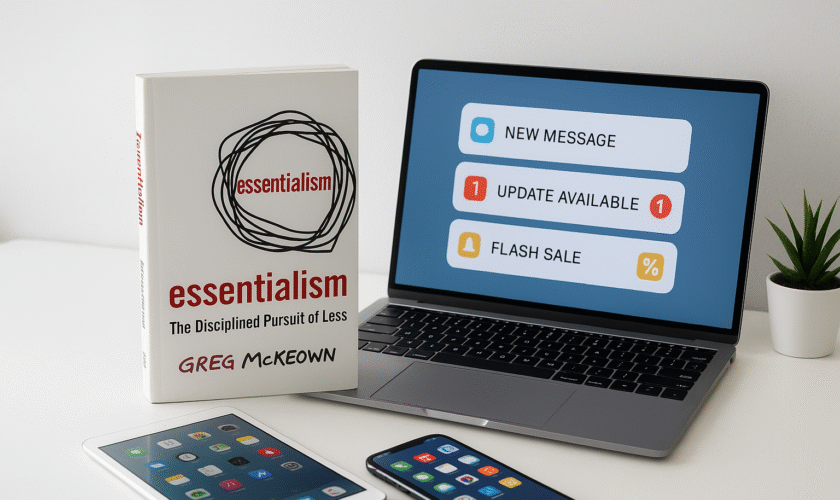
Essentialism by Greg McKeown offers a transformative approach for navigating today’s digital age, where technology can both empower and overwhelm us. Smartphones buzz relentlessly, emails pile up, social media demands our attention, and apps compete for every second of our day. Amid this digital chaos, the pressing question becomes: how can we regain control over our time, energy, and focus?

Greg McKeown’s book, “Essentialism: The Disciplined Pursuit of Less”, provides a transformative answer. This book will change how you use tech forever, teaching you to focus on what truly matters and cut out the noise that hinders productivity.

In this review, we’ll explore the core concepts of Essentialism, its application to technology, and practical steps you can take to implement its lessons in your digital life. Whether you’re a tech enthusiast, a professional struggling with digital distractions, or someone seeking more focus in a busy world, this guide will show why Essentialism is a must-read.

What is Essentialism?

The Core Concept

At its heart, Essentialism is the art of discerning what is essential and eliminating what is not. McKeown defines it as “the disciplined pursuit of less but better.” Unlike multitasking or trying to do everything, Essentialism teaches that true success and satisfaction come from concentrating on the few things that truly matter. It’s not about doing more faster—it’s about doing less, but achieving far greater impact.

The philosophy of Essentialism extends beyond time management; it’s a mindset shift. It challenges the cultural pressure to say yes to every opportunity, attend every meeting, and respond to every notification. By applying Essentialist principles, individuals can regain control over their energy, decisions, and focus.

Why It Matters in a Tech-Heavy World

The digital world is filled with distractions. Social media notifications, endless email chains, instant messages, and new apps constantly compete for our attention. Technology, while designed to simplify life, often leads to information overload and stress. Many of us spend hours each day reacting to digital demands rather than focusing on meaningful work.

Essentialism provides a framework to combat this modern dilemma. It teaches that every notification, app, and online task should be evaluated based on its true importance. By prioritizing what matters, we can reduce mental clutter, enhance productivity, and regain a sense of control over our tech-driven lives.

How Essentialism Changes Your Approach to Technology

Prioritizing Digital Tasks

One of the most practical lessons in Essentialism is learning to prioritize. Not all digital tasks are created equal. Some emails, apps, or notifications may seem urgent, but they offer little real value. Essentialism encourages a critical assessment of every tech-related activity.

By prioritizing high-impact tasks, such as responding to key emails, completing essential projects, or engaging meaningfully on professional networks, you can make technology work for you instead of allowing it to dictate your day. This is a shift from being reactive to being proactive in your digital life.

Saying No to Non-Essential Digital Noise

The ability to say no is central to the Essentialist mindset. McKeown emphasizes that every yes to a non-essential task is a silent no to something truly important. In the tech world, this means unsubscribing from unnecessary newsletters, turning off push notifications, and avoiding apps that waste time.

By removing non-essential digital distractions, you free up mental space and time for activities that genuinely contribute to your goals. Saying no is not about being lazy; it’s about making intentional choices that maximize your impact.

Creating Focused Tech Routines

Essentialism also promotes structured routines to manage technology use. Instead of sporadically checking emails or scrolling social media, you can create designated tech times. For instance, responding to emails only at specific hours, batching social media interactions, or setting aside distraction-free periods for deep work.

Focused routines reduce cognitive load, minimize interruptions, and enhance productivity. Technology, when used intentionally, becomes a powerful tool rather than a source of stress.

Key Lessons from Essentialism by Greg McKeown for Tech Users
Essentialism by Greg McKeown

Less But Better

McKeown’s mantra, “less but better,” applies directly to technology. Instead of using every productivity app, subscribing to every platform, or attempting every new digital trend, focus on the tools that truly matter. Select apps, software, and devices that enhance your work, creativity, or personal growth.

For example, instead of juggling multiple project management tools, pick one that meets all your essential needs. By reducing tech clutter, you can spend more energy on what actually drives results.

Clarity is Power

Essentialism emphasizes clarity. When you are clear about your priorities, distractions lose their power. In a tech-heavy world, clarity means understanding which digital inputs align with your goals and which don’t.

Creating a clear tech strategy—knowing which apps, emails, or platforms deserve attention—helps reduce anxiety and decision fatigue. Clarity allows you to approach technology with purpose rather than habitually reacting to every ping.

Intentional Technology Use

Mindfulness is a recurring theme in Essentialism. Using technology intentionally means consciously deciding how, when, and why you engage with digital tools. It’s about focusing on quality interactions over quantity, whether that’s in emails, social media, or online research.

Intentional tech use encourages reflection. Before opening an app or responding to a notification, ask: “Does this align with my priorities?” This habit fosters discipline and ensures that technology serves your goals rather than undermines them.

Practical Tips to Apply Essentialism in Your Digital Life

Audit Your Digital Life

Start by conducting a digital audit. List all apps, subscriptions, emails, and online tools you regularly use. Identify which ones are essential and which are non-essential. Removing or minimizing non-essential tools immediately reduces clutter and stress.

This process can reveal surprising insights. You might discover apps you no longer need, emails that create unnecessary urgency, or online routines that consume excessive time without meaningful results.

Limit Notifications and Alerts

Notifications are one of the biggest sources of distraction. Essentialism advocates turning off non-critical alerts. Limit notifications to important emails, calendar reminders, or urgent communication channels.

Consider using “Do Not Disturb” modes during focused work sessions or creating separate devices for essential work versus leisure. By controlling notifications, you reclaim attention and mental energy.

Schedule Tech-Free Time

Designating tech-free periods is crucial for maintaining focus and mental clarity. Essentialism encourages setting boundaries for technology use, such as offline hours in the evening or distraction-free work blocks.

Tech-free time allows for reflection, deep thinking, and creative problem-solving. It strengthens your ability to focus when you are online and reduces the feeling of constant digital overwhelm.

Why Every Tech User Should Read Essentialism

In an era of digital saturation, Essentialism offers a roadmap to simplicity, focus, and intentional living. The book is not only about productivity but also about well-being, mental clarity, and purpose. For tech users, the lessons are particularly transformative.

By applying Essentialism principles, you can:

  • Increase productivity without increasing effort.
  • Reduce stress caused by constant digital distractions.
  • Make intentional choices about technology use.
  • Gain mental clarity and a sense of control over your digital environment.
  • Focus on activities that truly create value and satisfaction.

Essentialism transforms the way we interact with technology, turning it from a source of overwhelm into a tool for achieving meaningful goals.

Conclusion

Greg McKeown’s Essentialism is more than a productivity book; it is a guide to living intentionally in a world full of distractions. By teaching the disciplined pursuit of less but better, it empowers readers to focus on what truly matters and eliminate the non-essential.

For anyone feeling overwhelmed by technology, constantly checking emails, juggling apps, or succumbing to social media distractions, this book provides actionable strategies to regain control. By prioritizing, saying no, and using technology intentionally, you can reclaim your time, energy, and focus.

If you want to enhance your digital life, reduce distraction, and improve productivity, Essentialism by Greg McKeown is a must-read. This book will change how you use tech forever.

FAQs About Essentialism by Greg McKeown and Tech Use

Can Essentialism help reduce smartphone addiction?

Yes. By teaching mindful and intentional technology use, Essentialism encourages setting boundaries, reducing notifications, and prioritizing essential digital activities, which can significantly reduce smartphone addiction.

How do I start applying Essentialism today?

Begin with a digital audit. Identify essential tools and tasks, remove distractions, limit notifications, and create focused tech routines. Start small, and gradually integrate Essentialism principles into your daily life.

Is Essentialism only about work productivity?

No. While Essentialism is highly effective for work productivity, its principles apply to all aspects of life, including personal relationships, hobbies, and digital habits. It’s about focusing on what truly matters in any area of life.

Does Essentialism require quitting all technology?

Absolutely not. Essentialism is about intentional use, not avoidance. It’s about using technology selectively and purposefully to maximize impact while reducing distraction.

Can Essentialism improve focus in a tech-heavy workplace?

Yes. By prioritizing essential tasks, minimizing interruptions, and creating structured work routines, Essentialism can significantly improve focus and efficiency in a workplace dominated by technology.

read more
Digital Minimalism

You Should Delete 90% of Your Digital Files — Here’s Why It Frees Your Mind

You Should Delete 90% of Your Digital Files

If you’ve ever felt overwhelmed by the sheer volume of documents, photos, and downloads on your computer or cloud storage, you’re not alone. Learning to delete digital files can actually transform the way you think, work, and even sleep.

Yes, it sounds extreme — who wants to part with 90% of their files? — but the science behind digital decluttering is compelling.

A 2017 study from Princeton University found that cognitive performance drops significantly when the brain is bombarded with too much information at once. Every unorganized file, every forgotten folder, and every redundant photo is silently adding mental clutter.

In short, your computer chaos mirrors your brain chaos.

This article explores why You Should Delete 90% of Your Digital Files and how doing so can free your mind from digital clutter.

The Hidden Cost of Digital Overload

Digital overload isn’t just about storage space. It’s about how your mind processes constant streams of information. Every time you open a cluttered folder, your brain unconsciously sorts through dozens — maybe hundreds — of items, deciding which are relevant. Over time, this drains mental energy.

Statistics to consider:

  • A 2019 survey by Adobe revealed that knowledge workers spend 2.5 hours per day searching for misplaced digital files. That’s roughly 30 days per year wasted just trying to locate files.
  • Another study from the University of California found that multitasking with digital files reduces IQ by 10 points — temporarily. Imagine the toll of constant digital clutter.

This isn’t just theory; it’s happening to millions of people who keep everything “just in case.”

Digital Minimalism and Mental Clarity

Enter the concept of digital minimalism. Popularized by author Cal Newport, digital minimalism encourages intentionally curating digital tools, apps, and files to support your goals rather than distract you.

By deleting unnecessary files, you’re:

  1. Reducing decision fatigue. Each unnecessary file is a tiny decision your brain has to make.
  2. Improving focus. Fewer distractions mean your attention goes to what really matters.
  3. Increasing productivity. Less clutter = less time wasted searching.

Think of it as cleaning your room, but for your digital life. And yes, studies show physical and digital decluttering have overlapping effects on stress reduction.

The 90% Rule — Why It Works

Here’s a practical approach: delete 90% of your digital files. This may sound radical, but most of what we store digitally is either:

  • Redundant copies of documents
  • Old photos that never get viewed
  • Temporary files downloaded for a single use
  • Emails or attachments that no longer serve a purpose

A professional organizer from New York, Jennifer Ford, recommends a strict “one in, one out” rule for digital files. If you download or save a new file, remove one old file that you no longer need. Over time, this reduces clutter dramatically without feeling like a sacrifice.

Real-Life Examples

Case Study — From Chaos to Clarity

Consider Maria, a graphic designer from London. Her laptop had over 50,000 files. She spent hours each week searching for assets, old client projects, and reference images. After applying a digital decluttering system and deleting around 90% of unused files, she reported:

  • 40% less time spent searching for files
  • Noticeable reduction in work-related stress
  • Improved project completion speed

The difference wasn’t just operational — it was psychological. Maria described a feeling of “mental lightness” akin to a weight being lifted.

Big Corporations Are Doing It Too

It’s not just individuals. Companies like Google and Microsoft periodically audit internal file storage, archiving or deleting old documents. According to Microsoft’s internal report, teams with organized digital spaces were 23% more productive, proving that decluttering isn’t just a personal benefit — it’s a business advantage.

Why Most People Resist Deleting Digital Files

The fear of losing something important keeps many from deleting files. We cling to “just in case” data. But most of these fears are exaggerated.

Research shows that:

  • Over 80% of files on personal computers are rarely or never accessed after creation.
  • Cloud backup solutions make it safe to archive rather than hoard files.

It’s about learning to trust that you don’t need to keep everything. The files you do retain should serve a purpose — either functional or sentimental.

How to Begin Your Digital Decluttering Journey

Starting small is key. You don’t have to delete everything at once. Try these initial steps:

  1. Sort files by type: Documents, images, videos, downloads. Tackling one category at a time makes the task manageable.
  2. Use storage analytics tools: Apps like WinDirStat (Windows) or DaisyDisk (Mac) help visualize storage usage.
  3. Archive sentimental items: Cloud storage or external drives can hold files you don’t want to delete but don’t need daily.
  4. Set a schedule: Weekly or monthly decluttering sessions prevent future digital pile-ups.

These steps set the stage for a transformative digital cleanup. By the end of this process, you’ll find not just free storage space, but a freer mind.

Actionable Strategies for a Clutter-Free Digital Life

Now that you’ve seen why deleting 90% of your digital files matters, the next step is sustainability. You don’t want your digital space to revert back to chaos.

Here are practical strategies to maintain clarity:

Adopt the “One-Touch” Rule

The “one-touch” rule means handling each file only once. When a file lands on your desktop or downloads folder, decide immediately whether to:

  • Delete it
  • Move it to a relevant folder
  • Archive it for later reference

A McKinsey report found that companies using streamlined digital workflows saved up to 2 hours per employee per day, reinforcing that quick, decisive actions prevent clutter from accumulating.

Use Cloud Storage Wisely

Cloud storage is a great tool, but it can also perpetuate digital clutter if mismanaged. Organize your files with:

  • Clear folder structures (e.g., Projects → Client Name → Year)
  • Naming conventions that include dates and project identifiers
  • Tags or metadata for easy searching

Google Drive, Dropbox, and OneDrive also allow automatic archiving of older files, reducing the temptation to hoard everything locally.

Comparing Digital Storage Methods

When decluttering, it helps to understand storage options and their benefits.

Storage TypeProsConsBest Use
Local DriveQuick access, offline availabilityRisk of physical failureDaily work files
External DriveLarge capacity, portableCan be lost or damagedArchived files & backups
Cloud StorageAccessible anywhere, secureSubscription costs, privacy concernsLong-term storage, collaboration
HybridCombines local + cloudRequires managementIdeal for balancing accessibility & safety

By strategically choosing where to store files, you reduce mental load and simplify retrieval.

Case Study — The Professional Declutterer

Consider David, a lawyer managing a digital library of 100,000 documents accumulated over 15 years. By following a structured decluttering plan:

  1. He deleted redundant and outdated files (70% of total).
  2. Archived rarely used files to cloud storage.
  3. Implemented a folder naming system for quick retrieval.

Within three months, David reported:

  • A 50% increase in productivity
  • Less stress when preparing for cases
  • More confidence in handling digital data

David’s example proves that systematic deletion isn’t just for tech enthusiasts—it’s practical for any professional juggling large volumes of digital information.

Pros and Cons of Deleting Digital Files

Pros

  • Mental clarity: Reduces decision fatigue and improves focus.
  • Efficiency: Less time spent searching for files.
  • Security: Fewer files reduce the risk of sensitive data leaks.
  • Cost-effective: Minimizes need for additional storage upgrades.

Cons

  • Potential accidental deletion: Risk if backups aren’t in place.
  • Time investment: Initial decluttering can take hours or days.
  • Emotional attachment: Some files may hold sentimental value.

By planning ahead and using backups, most cons are manageable.

Tips on How You Should Delete 90% of Your Digital Files

  1. Start with downloads and temp files: These are usually safe to delete.
  2. Batch-delete old emails: Especially those with large attachments.
  3. Use duplicate file finders: Apps like CCleaner or Gemini detect duplicates automatically.
  4. Set periodic reminders: Quarterly declutter sessions prevent accumulation.
  5. Adopt a “less is more” mindset: Ask yourself if each file truly adds value.

Implementing these habits gradually turns decluttering into a routine, rather than a stressful project.

How Digital Decluttering Boosts Productivity

It’s not just about storage space; it’s about efficiency and mental energy. According to a study by the University of California, reducing digital clutter:

  • Improves task completion speed by up to 30%
  • Reduces cognitive load, allowing deeper focus
  • Enhances creativity by freeing mental bandwidth

For knowledge workers, even small reductions in clutter can translate to hours of reclaimed productivity each month.

Verdict — Should You Really Delete 90% of Your Files?

The answer: yes, if done thoughtfully. You don’t have to delete everything in a day; the goal is to remove unnecessary digital baggage. Key takeaways:

  • Prioritize files by relevance and frequency of use.
  • Use cloud storage and backups to protect important data.
  • Make decluttering a habit, not a one-time event.

The result is not just a lighter hard drive but a lighter mind. Digital minimalism is about creating space to think, focus, and create.

Conclusion

Deleting 90% of your digital files may feel radical, but it’s a powerful step toward mental clarity, productivity, and overall well-being. From reducing stress to saving hours of wasted time, digital decluttering is a modern strategy for living efficiently in an information-heavy world.

Start small, be consistent, and embrace the freedom that comes with a cleaner digital environment. Your mind—and your hard drive—will thank you.

FAQs

Q1: Is it safe to delete 90% of my digital files?
A1: Yes, if you backup important files or archive them in cloud storage, deleting unnecessary files is safe and beneficial.

Q2: How often should I declutter my digital files?
A2: Schedule decluttering sessions quarterly or monthly to prevent buildup and maintain organization.

Q3: What if I accidentally delete something important?
A3: Use cloud storage with version history or keep a backup on an external drive to recover lost files.

Q4: Can digital decluttering really improve productivity?
A4: Yes, studies show that reducing digital clutter decreases time spent searching for files and improves focus.

Q5: Should I delete emails as part of decluttering?
A5: Absolutely. Archive or delete old emails with large attachments to streamline your inbox.

Further Reading

  1. Digital Minimalism by Cal Newport
  2. Adobe Workplace Study
  3. University of California Study on Multitasking
  4. WinDirStat: Disk Usage Statistics Viewer
  5. DaisyDisk: Disk Space Analyzer
read more