
Let’s be honest—our lives are more connected than ever, and sometimes it feels exhausting. The moment we sit down after work, our phones start buzzing with messages, notifications, emails, and social media updates. Before we know it, we’ve scrolled for hours without even realizing it. Phones, tablets, and computers dominate our evenings, keeping our minds engaged long after the day’s responsibilities are over. This constant connectivity doesn’t just steal our free time—it can make it hard to relax, focus, or even get a good night’s sleep. The subtle stress of always being “on” creeps into our mental space, leaving many of us drained and restless.
This is where the idea of no-screen evenings comes in. Simply put, it’s about intentionally stepping away from screens for part of your evening to give your mind and body a chance to unwind. A digital detox at night isn’t about missing out; it’s about reclaiming your time for activities that truly matter. Whether it’s reading a book, journaling your thoughts, meditating, or enjoying some offline hobbies, you’re giving yourself permission to relax, focus, and reset.
The benefits of no-screen evenings go beyond just feeling less stressed. People who make this small adjustment in their routines often notice improved sleep, reduced anxiety, better focus, and the ability to establish healthy nighttime routines. Even turning off your screens just an hour before bed can create a noticeable difference in your overall wellbeing.
Table of Contents
Why You Need No-Screen Evenings
The Impact of Screens on Sleep
If you’ve ever stared at your phone late at night and wondered why you can’t fall asleep, here’s why. Screens emit blue light, which interferes with melatonin—the hormone your body produces to help you sleep. When your brain is exposed to this light, it thinks it’s still daytime and keeps you alert, even if your body is craving rest.
Reducing screen time before bed is a simple way to improve your sleep quality. By setting aside time for no-screen evenings, you’re allowing your body to wind down naturally. Dim the lights, put away your devices, and let your mind shift from the busyness of the day to a calmer state. Over time, your body starts associating evenings with rest, making it easier to fall asleep and wake up refreshed.
Mental Health Benefits
Screens don’t just affect your sleep—they can also influence your mental health. Constant notifications and digital chatter create a low-level stress that builds up over the day. Taking time for evening phone-free routines allows your mind to decompress, reducing tension and helping you feel calmer.
Disconnecting from devices also encourages mindfulness. Without the constant pull of notifications, you can focus on the present moment. That might mean enjoying a cup of tea in peace, reflecting on your day, or simply sitting quietly without distractions. Mindfulness during these moments isn’t just relaxing—it helps you gain clarity and emotional balance, which can improve focus and reduce anxiety in your daily life.
Creating Mindful Evening Habits
Building mindful habits is a cornerstone of no-screen evenings. These habits can include journaling, reading, meditating, or light stretching. The idea is to make your evening intentional, rather than letting screens dictate how you spend your time. By practicing mindful evening routines, you’re training your brain to transition from work mode to relaxation mode. Over time, these small adjustments can significantly improve your mental clarity and overall wellbeing.
How to Start a No-Screen Evening Routine
Starting a no-screen evening routine doesn’t have to be intimidating. The key is to introduce practical, enjoyable practices that make disconnecting feel natural rather than restrictive.
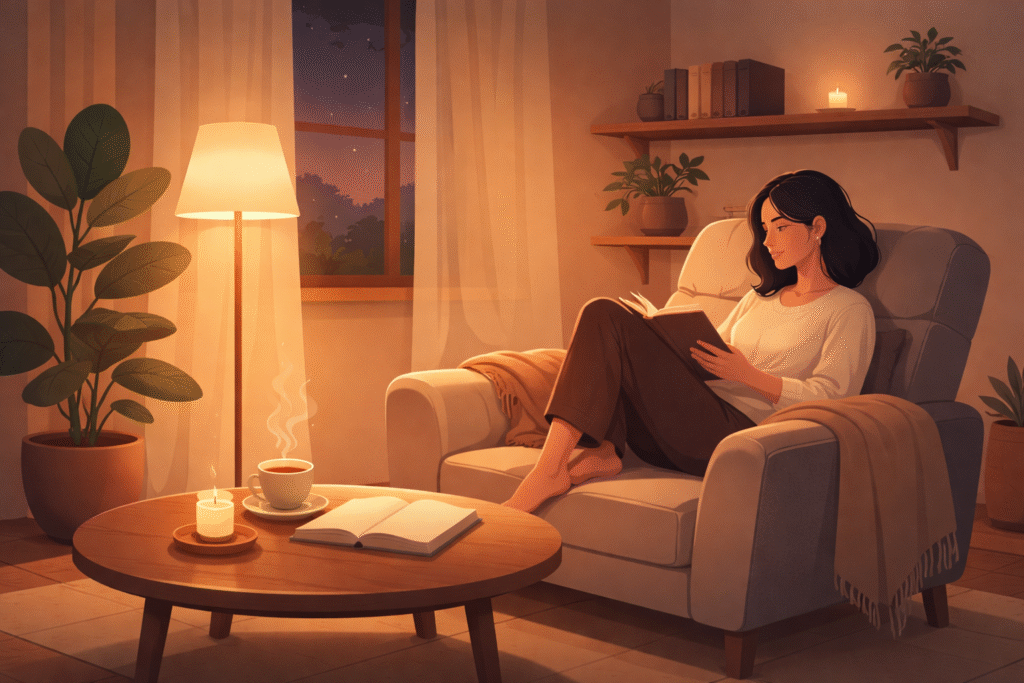
Here are seven ways to create a routine that sticks:
1. Set a Screen Curfew
Decide on a realistic time each night to put away your devices. Whether it’s 8:00 PM or an hour before your usual bedtime, having a cutoff helps signal to your brain that it’s time to wind down. Use phone timers, app limits, or device settings to enforce this habit. A consistent screen curfew helps your body get into a rhythm and improves sleep quality over time.
Create a Relaxing Environment
Your surroundings play a huge role in how well you unwind. Dim the lights, play some soft music, or light candles to create a calm atmosphere. When your space feels cozy and inviting, evening relaxation without screens becomes far more enjoyable. A peaceful environment encourages your mind to slow down, making it easier to enjoy your evenings offline.
Replace Screen Time with Other Activities
Instead of scrolling, try engaging in offline hobbies or creative pursuits. Reading, journaling, meditation, or light stretching are excellent options. You could also explore drawing, crafting, or listening to podcasts. These activities not only replace screen time but also help you establish healthy nighttime routines that nourish your mind and body.
Plan a Mindful Wind-Down Ritual
Rituals help your body and mind recognize that it’s time to rest. Practices like deep breathing, gratitude journaling, or gentle yoga create a natural transition from activity to relaxation. A mindful wind-down ritual reinforces the benefits of no-screen evenings, making disconnecting feel intentional rather than forced.
Communicate Your Boundaries
Let friends and family know about your no-screen evenings so they’re aware when you’re offline. Setting clear boundaries reduces anxiety about missing messages or notifications. Communicating your routine also encourages others to respect your offline time, making it easier to stick to your new habits.
Gradually Reduce Screen Exposure
If going fully screen-free feels overwhelming, start small. Begin with 30–60 minutes before bed without screens and gradually increase the duration over time. Track your progress using a journal or app, and celebrate small wins. Gradual reduction helps your brain and body adjust, making no-screen evenings a sustainable habit.
Incorporate Social or Offline Fun
Evenings don’t have to feel lonely without screens. Play board games, engage in conversation, or enjoy offline hobbies. Making your evening phone-free routines fun ensures that disconnecting doesn’t feel like a sacrifice. Combining social interaction with offline activities also strengthens relationships and keeps your nights enjoyable and fulfilling.
Managing the Fear of Missing Out (FOMO)
One of the biggest hurdles when starting no-screen evenings is the fear of missing out, or FOMO. It’s that nagging feeling that if you step away from your phone or laptop, you might miss an important message, a breaking news story, or a social update. The truth is, most notifications aren’t as urgent as they feel. By addressing FOMO head-on, you can enjoy your evenings without anxiety and make your evening phone-free routines truly relaxing.
Communicate Boundaries
A simple yet powerful strategy is to communicate your intentions to friends, family, and even colleagues. Let them know that you’re implementing no-screen evenings and that you won’t be checking messages during that time. This doesn’t just reduce anxiety about “missing out”—it also sets expectations for everyone around you. People are more likely to respect your offline time when they understand why it matters.
You might say something like, “I’m trying to unplug for an hour each evening to focus on rest and relaxation. I’ll get back to messages afterward.” Clear communication like this can ease the worry that something important will slip through the cracks, allowing you to fully embrace a digital detox at night.
Gradual Transition
Going cold turkey can feel intimidating, so starting slowly often works best. Begin with 30–60 minutes of screen-free time and gradually extend the duration. This allows your mind to adjust and makes the habit easier to stick to long-term.
Apps that track screen usage or even a simple journal can help monitor your progress. Noticing improvements in mood, sleep quality, or focus can be incredibly motivating. Over time, these small, manageable steps turn into a natural rhythm, making no-screen evenings a seamless part of your routine.
Tips to Make No-Screen Evenings Enjoyable
Disconnecting doesn’t have to feel like a chore. In fact, the more enjoyable you make your evenings, the easier it is to maintain the habit. Here are some strategies to turn no-screen evenings into a positive, fulfilling experience.
Pair With Hobbies or Creative Projects
Use your screen-free time to dive into hobbies you’ve been neglecting. Whether it’s painting, knitting, writing, or cooking, focusing on creative projects not only distracts from digital devices but also provides a sense of accomplishment. Engaging in these activities gives your evenings structure and purpose, making the digital detox at night feel rewarding instead of restrictive.
Incorporate Mindfulness or Light Exercise
Mindfulness practices and gentle physical activity are perfect complements to evening phone-free routines. Meditation, stretching, or yoga can calm the nervous system, reduce stress, and prepare your body for restful sleep. Even a short walk around your home or a few minutes of deep breathing can make a huge difference in how relaxed and present you feel.
Make It Social
Being offline doesn’t mean being isolated. Invite family members or housemates to participate in no-screen evenings with you. Play board games, cook together, or simply engage in conversation. These moments of social interaction help strengthen relationships and add joy to your evenings, proving that unplugging can actually bring people closer rather than leaving you feeling cut off.
Tracking Your Progress and Staying Consistent
Consistency is key to making no-screen evenings a sustainable habit. Tracking your progress can help you stay motivated and notice tangible benefits.
Journal Sleep Quality and Mood Improvements
Keep a small notebook or use a digital journal to record how you feel during and after evening phone-free routines. Note improvements in sleep quality, stress levels, or mental clarity. Seeing a pattern emerge over time reinforces the value of unplugging and helps you stay committed to the practice.
Reward Yourself for Sticking to the Routine
Celebrating small wins is a great way to maintain motivation. Whether it’s treating yourself to a favorite snack, enjoying a relaxing bath, or indulging in a hobby you love, rewards can make your no-screen evenings feel positive and enjoyable rather than restrictive. Over time, this reinforcement builds a lasting habit that’s easy to integrate into your lifestyle.
Conclusion
Embracing no-screen evenings is more than just putting away devices—it’s a pathway to better sleep, reduced stress, and greater mental clarity. By gradually implementing evening phone-free routines, communicating boundaries, and finding enjoyable activities to replace screen time, you can reclaim your evenings without feeling disconnected. This simple shift can help you establish healthy nighttime routines, improve focus, and create a calmer, more intentional end to your day.
A digital detox at night doesn’t need to be extreme or rigid. Starting small, tracking your progress, and making the experience enjoyable ensures that your evenings become a time for rest, mindfulness, and meaningful connection. Over time, you’ll likely find that stepping away from screens isn’t just beneficial—it’s something you actually look forward to.
FAQs
1. What is the best time to start a no-screen evening?
Most people find success starting 30–60 minutes before bedtime. Some prefer a full hour or more, depending on lifestyle and schedule. The key is consistency.
2. How long should I avoid screens before bed?
Even 30 minutes can help your body prepare for sleep. Gradually increasing to 60–90 minutes often yields better results.
3. Can no-screen evenings improve mental health?
Absolutely. Disconnecting reduces stress, promotes mindfulness, and allows your mind to rest from constant stimulation.
4. How do I manage notifications while doing a digital detox?
Communicate boundaries with friends and family, use “Do Not Disturb” modes, or schedule check-ins after your screen-free period.
5. What are some quick activities to replace screen time at night?
Reading, journaling, creative hobbies, light exercise, meditation, or social interaction are all excellent alternatives that make evening phone-free routines enjoyable.
Further Reading
Digital Detox Night Routine: 12 Rituals To Sleep Deeply – https://www.femina.in/wellness/de-stress/digital-detox-night-routine-12-rituals-to-sleep-deeply-288131.html
How to Reduce Screentime Before Bed for Quality Sleep – https://www.artofliving.org/us-en/meditation/sleep/reduce-screentime-quality-sleep
Digital Detox: Reducing Screen Time for Better Sleep – https://www.corporatewellnessmagazine.com/article/digital-detox-reducing-screen-time-for-better-sleep
Digital Detox Before Bed: A Step‑by‑Step Guide – https://inspiretopics.com/digital-detox-before-bed-a-step-by-step-guide/
Digital Detox & Sleep Boundaries – https://www.psychologytoday.com/intl/blog/the-colors-of-contemporary-psychiatry/202406/digital-detox-set-boundaries-with-your-screens